Oct 24, 2026new
TPE Grid Yoga Mat: A New 3D Cushioning Material for Yoga and Fitness Brands
Explore 3D TPE Grid yoga mat materials for yoga and fitness brands. Custom TPE Grid sheets, thickness, colors, structures and OEM/private-label solutions for B2B buyers.
Yoga mat development is moving beyond conventional flat foam surfaces.
For brands looking for new materials and more visible product differentiation, TPE Grid technology offers another direction for yoga mats, exercise mats and floor-based fitness products.
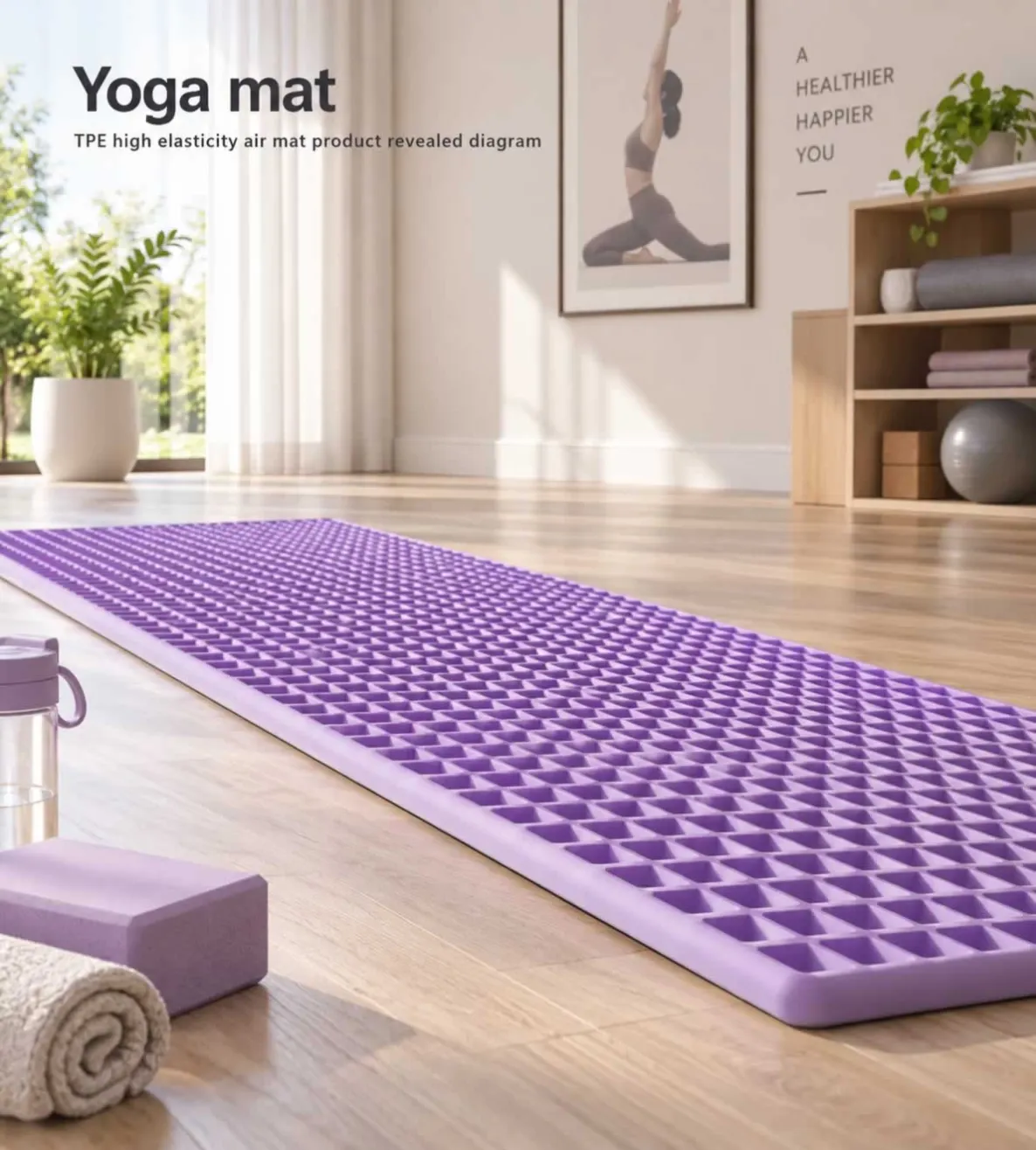
Unlike a conventional flat TPE foam mat, a TPE Grid Yoga Mat uses a three-dimensional elastic grid structure designed to create a responsive cushioning layer between the user and the floor.
For yoga brands, fitness equipment companies, wholesalers and private-label buyers, this provides an opportunity to develop a yoga mat with a clearly recognizable material structure rather than simply changing colors, prints or surface textures.
What Is a TPE Grid Yoga Mat?
TPE stands for Thermoplastic Elastomer, a flexible polymer material widely used where elasticity and resilience are required.
TPE is already established as a material for yoga mats. Conventional TPE mats are generally valued for their cushioning, flexibility and relatively lightweight construction.
However, TPE Grid technology changes the physical construction of the mat.
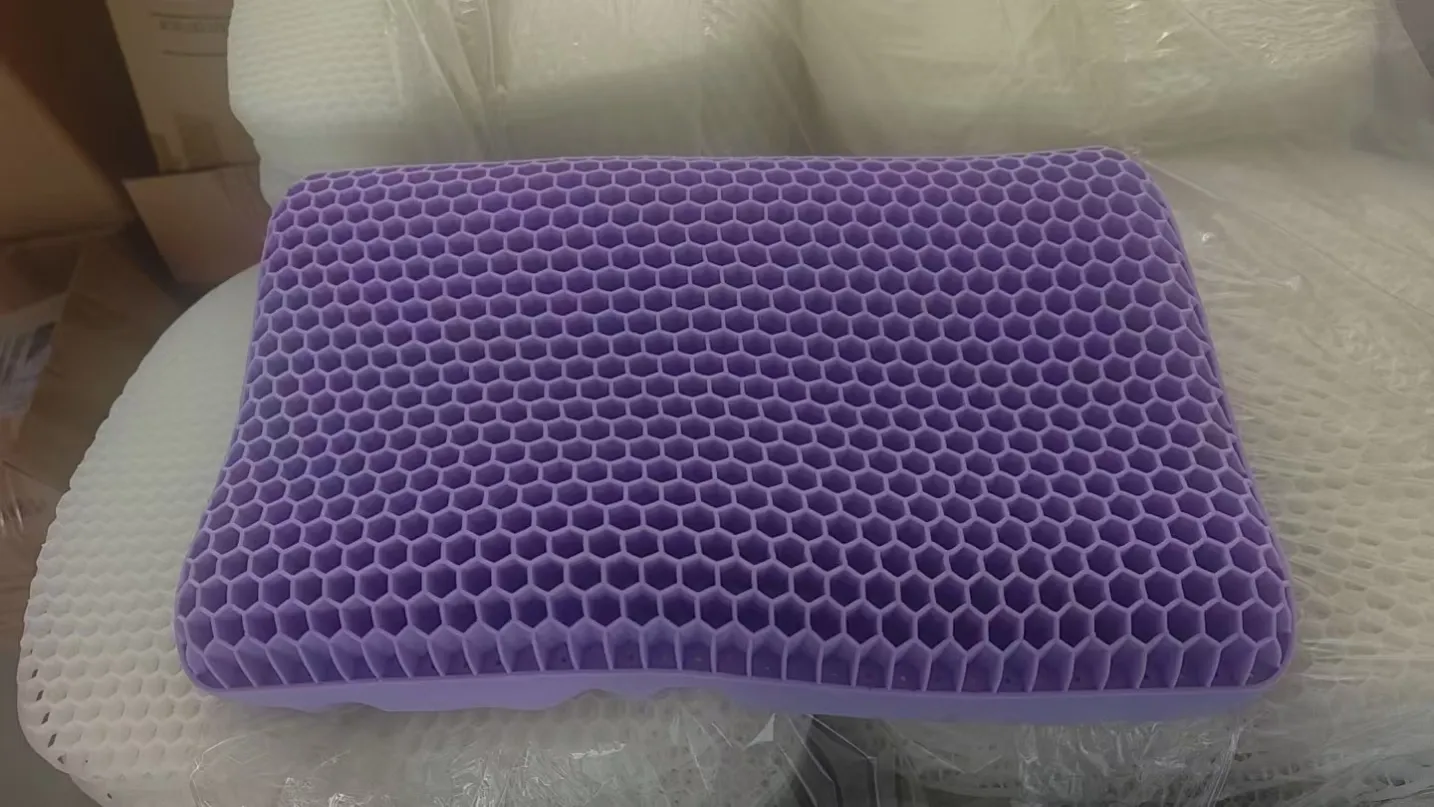
Instead of relying only on a flat foam layer, TPE material is formed into a three-dimensional grid containing numerous flexible cells.
When pressure is applied by the hands, knees, elbows or body, the grid walls can deform locally and then recover when the pressure is removed.
For product developers, this creates a different cushioning concept:
Traditional Yoga Mat: Flat Foam Structure
TPE Grid Yoga Mat: 3D Elastic Grid Structure
This visible structural difference can also become an important selling point for a new yoga or fitness collection.
Why Use a 3D TPE Grid Structure?
A yoga mat needs to balance several characteristics.
Too soft, and the user may feel unstable during standing poses.
Too hard, and floor exercises can become uncomfortable around the knees, elbows and other contact areas.
The TPE Grid structure provides another way to engineer this balance.
Rather than relying exclusively on foam density, manufacturers can adjust variables such as:
Grid thickness
Cell geometry
Cell size
Wall thickness
TPE hardness
Overall mat thickness
Surface construction
These variables allow product developers to evaluate different combinations of cushioning and stability for the intended application.
Responsive Cushioning for Floor Exercises
During yoga and floor exercises, pressure is not evenly distributed across the entire mat.
Hands, knees, elbows and other contact points can create concentrated loads.
The flexible grid structure can compress differently across these contact areas.
This makes TPE Grid worth evaluating for products where localized cushioning and elastic response are important.
Potential applications include:
Yoga Mats
For general home and studio practice.
Pilates Mats
For floor-based movements requiring additional cushioning.
Exercise Mats
For stretching, mobility and general fitness.
Meditation Mats
For products designed around seated comfort.
Home Fitness Mats
For consumers building dedicated home workout areas.
Performance should always be tested on the final construction rather than assumed from the TPE material alone.
More Than a Standard TPE Foam Mat
For brands, one of the challenges in the yoga mat category is differentiation.
Many products use similar flat surfaces and compete primarily through:
Color + Print + Thickness + Logo + Packaging.
A visible TPE Grid structure creates another design language.
The internal construction itself becomes something the customer can see.
Brands can demonstrate the material through:
Compression demonstrations
Elasticity tests
Grid close-up photography
Cross-section images
Product videos
Recovery testing
Different grid structures
This makes TPE Grid particularly interesting for brands trying to create a premium or technology-focused yoga mat collection.
Custom TPE Grid Sheets for Yoga Mat Development
For B2B customers, we can approach the product as either a finished concept or a material-development project.
A yoga mat manufacturer may already have its own surface fabrics, anti-slip bottom layers, lamination process and packaging.
In this case, the company may only need the TPE Grid sheet.
The TPE Grid can then be integrated with other materials according to the customer's own product construction.
Potential development directions include:
TPE Grid + Fabric
TPE Grid + Anti-Slip Base
TPE Grid + Foam Support Layer
TPE Grid + Custom Surface Material
This gives established manufacturers more flexibility than sourcing only a standard finished yoga mat.
Custom Colors for Private Label Brands
Color is another important part of yoga and wellness product development.
Depending on order quantity and technical requirements, TPE Grid products can be evaluated in different colors for OEM/private-label projects.
For example:
Purple, blue, navy, black or customized brand colors.
A brand developing its own yoga collection can provide a Pantone color reference or physical color sample for evaluation.
Private-label projects can also explore:
Custom logo
Custom dimensions
Custom grid structure
Custom thickness
Custom packaging
Custom labels and inserts
This allows the TPE Grid Yoga Mat to become part of the customer's own brand rather than another generic wholesale product.
Important: Grip Must Be Developed and Tested
For yoga products, cushioning alone is not enough.
Surface traction is critical.
Industry guidance shows that TPE mat grip can vary considerably according to surface texture, construction and moisture conditions. In particular, heavy perspiration can change traction characteristics.
Therefore, we recommend that B2B customers evaluate the complete yoga mat construction, including:
TPE Grid structure, top contact surface, bottom anti-slip design, thickness, hardness and intended exercise environment.
For a new product, prototype testing should come before mass production.
From Sample Sheet to New Yoga Mat Collection
For yoga and fitness brands interested in TPE Grid technology, product development can start with a relatively simple process:
Application Requirement → TPE Grid Selection → Sample Testing → Structure Adjustment → Branding & Packaging → Pilot Production → Mass Production
The first sample allows the buyer to evaluate:
- Cushioning
- Grid elasticity
- Thickness
- Firmness
- Stability
- Dimensions
- Color
- Surface compatibility
This is especially useful for brands that have never worked with TPE Grid materials before.
Who Can Source TPE Grid Yoga Mat Materials?
TPE Grid Yoga Mat development can be suitable for:
Yoga Mat Brands developing a new premium collection.
Fitness Brands expanding into floor exercise products.
Sporting Goods Companies looking for new material concepts.
Yoga Mat Manufacturers sourcing TPE Grid sheets for their own production.
Wholesalers and Importers looking for differentiated fitness products.
Private Label Brands developing their own yoga and wellness collections.
The project does not have to begin with a large finished-product order. For manufacturers, it can start from the material itself.
Looking for a TPE Grid Yoga Mat Manufacturer or Material Supplier?
TPE Grid Factory supplies customizable TPE Grid sheets and TPE comfort structures for B2B product development.
Beyond pillows, mattresses and furniture cushioning, TPE Grid can also be explored for yoga mats, Pilates mats and other floor-based fitness products.
If your company is developing a new yoga mat, send us:
Target mat dimensions + required thickness + intended application + preferred grid structure + color + logo/branding requirements + estimated quantity.
Our team can evaluate the TPE Grid specification and support prototype development.
For brands looking beyond conventional foam yoga mats, 3D TPE Grid technology offers a new material platform worth testing.
What is a TPE Grid Yoga Mat?
A TPE Grid Yoga Mat uses a three-dimensional thermoplastic elastomer grid as a flexible cushioning structure rather than relying only on conventional flat foam.
Can TPE Grid sheets be used to manufacture yoga mats?
Yes. TPE Grid sheets can be evaluated as a cushioning component and combined with suitable surface or anti-slip layers according to the manufacturer's product design.
Can the thickness and hardness be customized?
Yes. TPE thickness, hardness, dimensions, grid geometry and other specifications can be evaluated according to the project requirements.
Can yoga brands customize the color and logo?
Yes. OEM/private-label projects can evaluate custom colors, branding, dimensions and packaging based on order quantity and specifications.
Can I test a TPE Grid sample before bulk production?
Yes. Prototype testing is recommended so the buyer can evaluate cushioning, stability, grip, thickness and overall construction before mass production.