Oct 25, 2026new
Breathable Pillow Materials for Hot Sleepers
Hot sleepers often struggle with pillows that feel comfortable at first but gradually become warm during the night.
For pillow brands, bedding retailers and sleep product manufacturers, this creates a growing product-development opportunity: how can a pillow stay breathable without sacrificing pressure relief, support or comfort?
Many cooling pillows focus heavily on cooling fabrics or gel-infused foam. These solutions can help, but the internal pillow material is equally important.
If the pillow core has limited airflow, heat may still accumulate around the head and neck.
For brands developing new cooling or breathable pillow collections, choosing the right internal structure can make a significant difference.
Below are several breathable pillow materials worth considering for hot sleepers.
Why Does Pillow Material Matter for Hot Sleepers?
During sleep, heat is transferred from the head and neck into the pillow.
If the material is dense and airflow is limited, some of this heat can remain around the sleeping surface.
This is why two pillows with similar cooling covers can perform very differently overnight.
A breathable pillow should ideally address several factors:
- Internal airflow
- Heat dissipation
- Moisture management
- Pressure relief
- Material recovery
- Surface contact
- Cover breathability
For manufacturers, the goal is not simply to create a pillow that feels cold for a few seconds.
The more important goal is to create a structure that allows heat and air to move more efficiently throughout the night.
1. TPE Grid Material
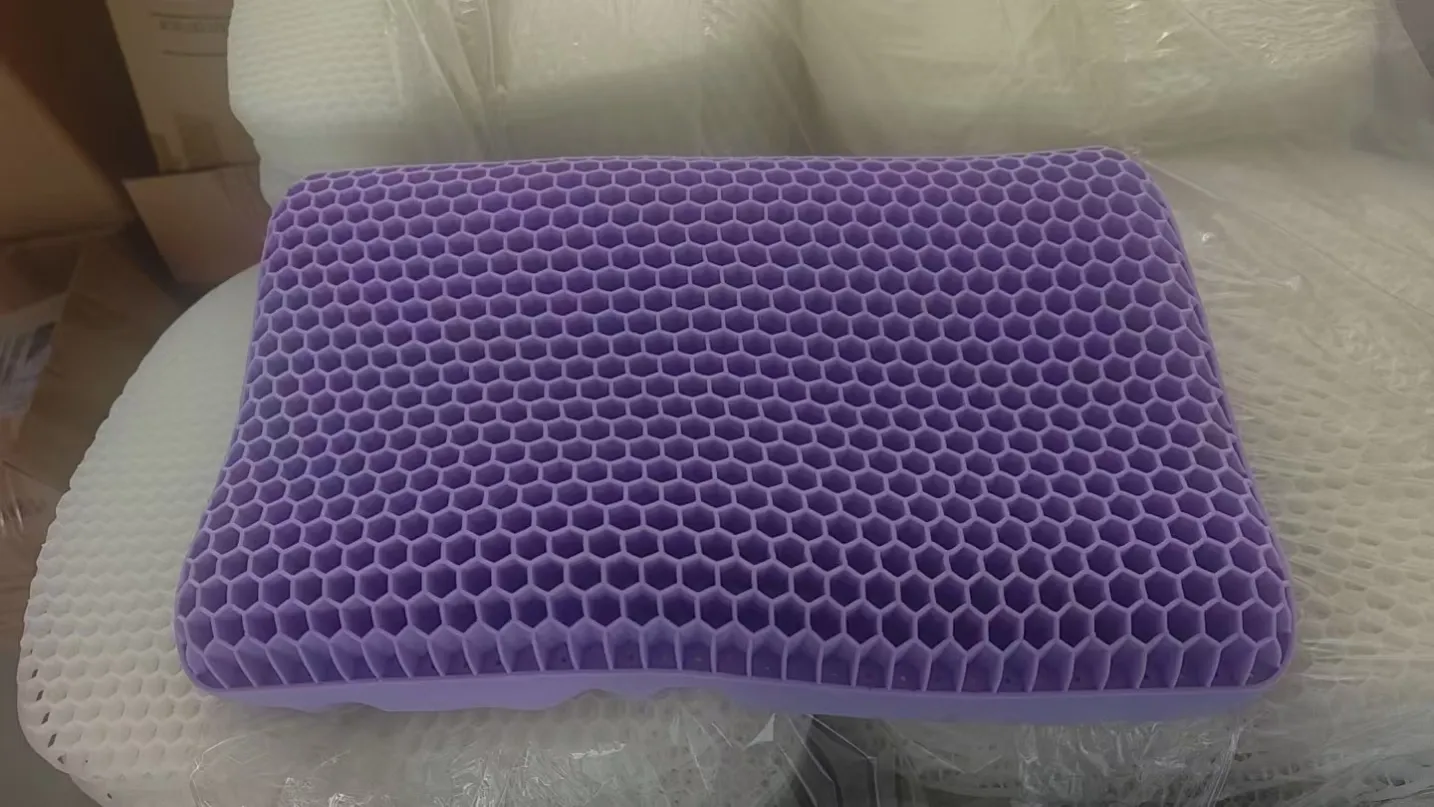
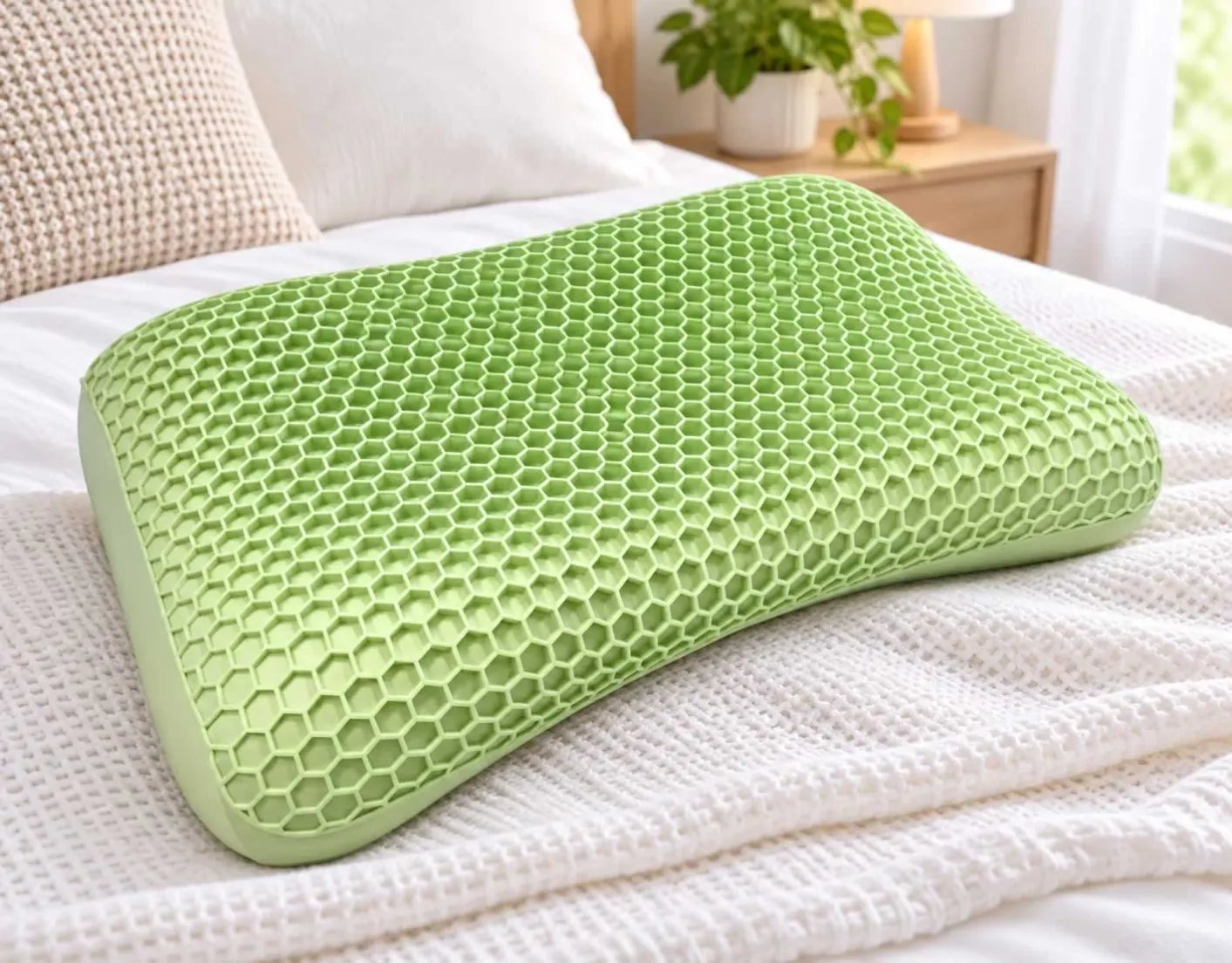
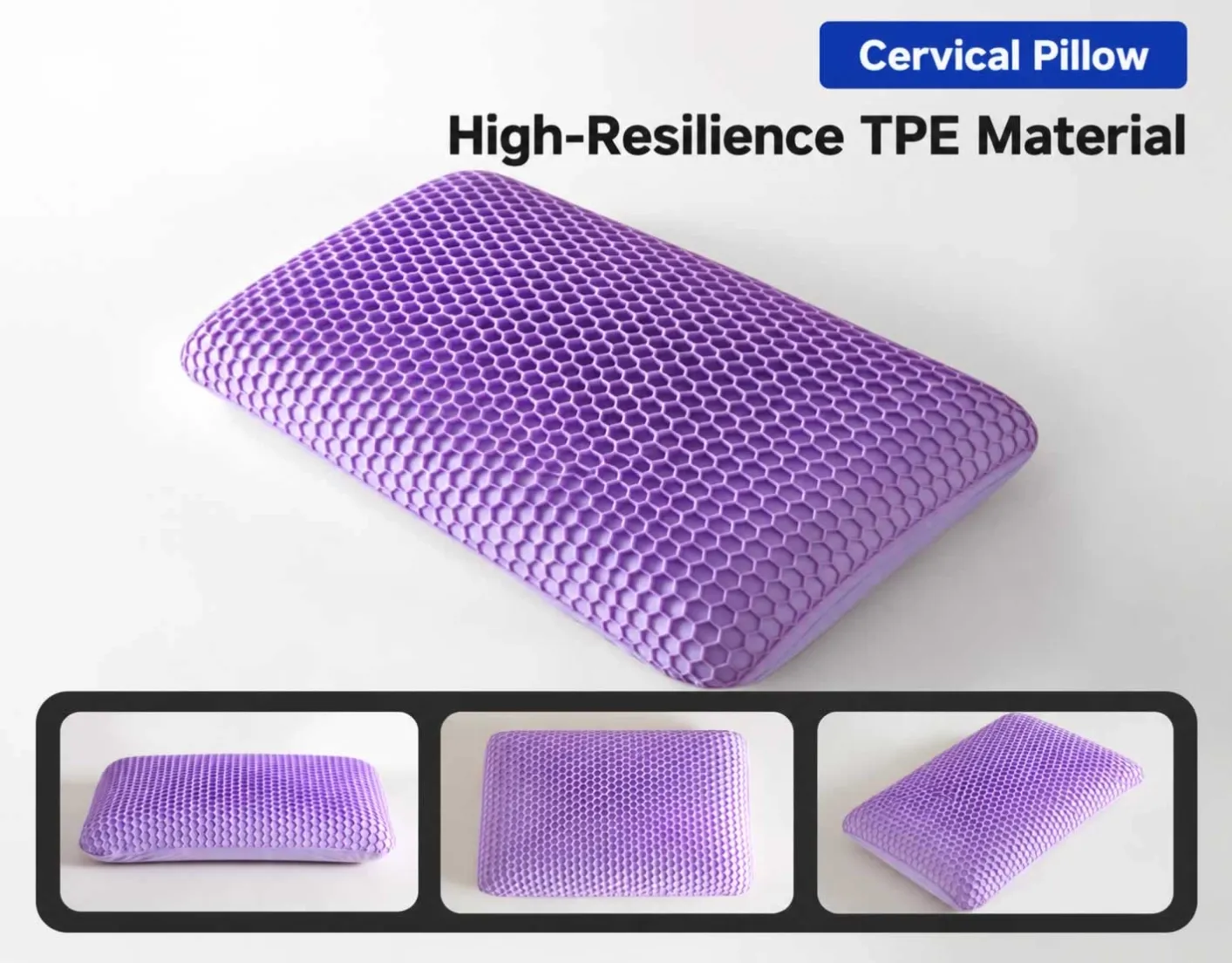
TPE Grid is an increasingly interesting material for brands developing breathable and cooling pillows.
Unlike a solid foam block, TPE Grid uses an open three-dimensional structure with multiple air channels.
The grid compresses under pressure while maintaining open spaces between the material walls.
This structure can help air move through the pillow more easily.
TPE Grid can also provide:
- Flexible support
- Pressure distribution
- Fast recovery
- Washable material options
- Adjustable firmness
- Different grid patterns
For pillow brands, one of the biggest advantages is that TPE Grid can be used in several product constructions.
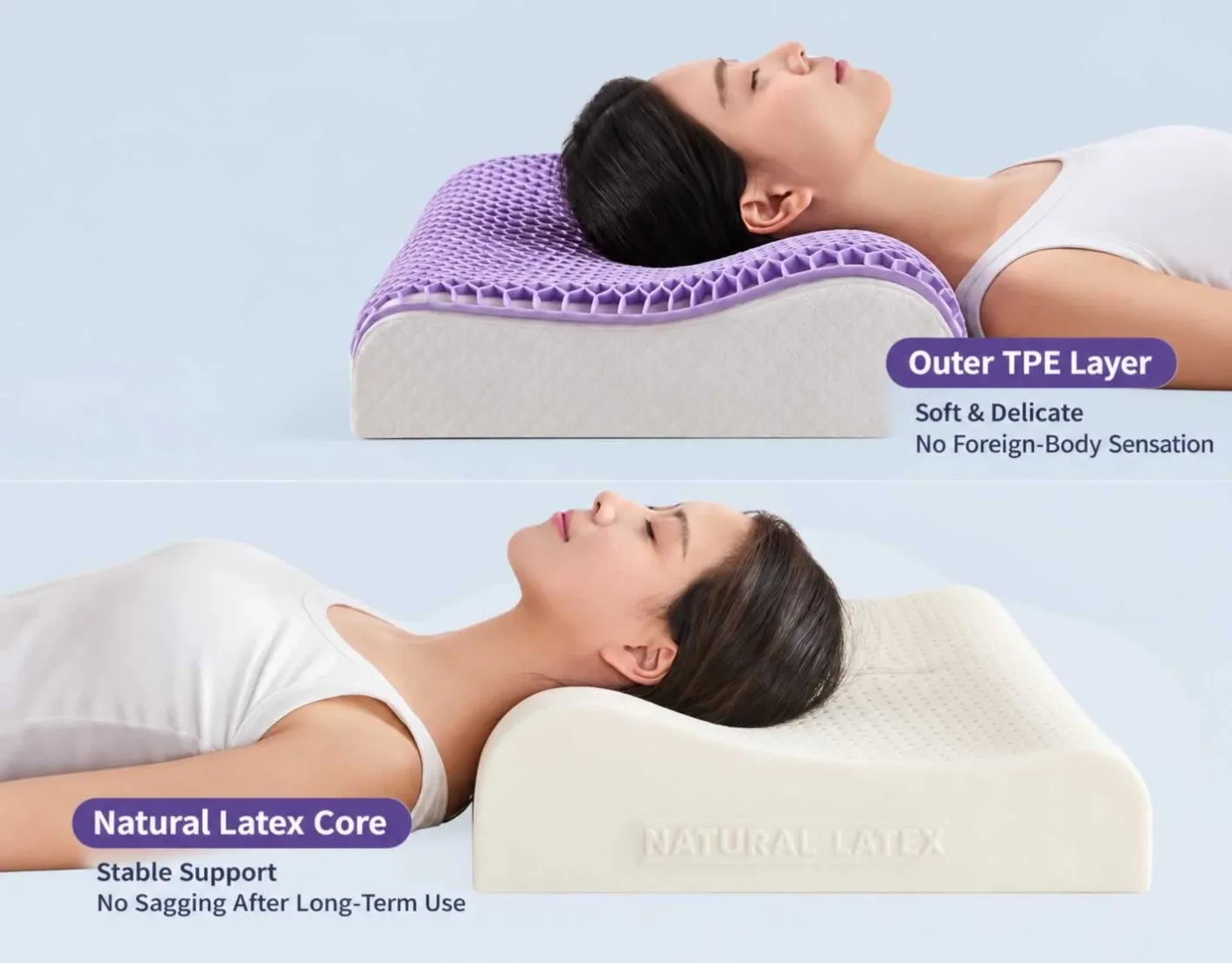
It can be made into a full TPE Grid pillow, or it can be combined with memory foam, microfiber or other filling materials.
This gives OEM buyers more flexibility when developing different comfort levels.
2. TPE Grid + Memory Foam
Memory foam remains popular because of its pressure-relieving and contouring properties.
However, some traditional solid memory foam pillows may retain heat because of their dense structure.
Instead of removing memory foam entirely, brands can use a hybrid construction.
For example:
TPE Grid breathable layer + Memory Foam support core
This allows the memory foam to provide familiar contouring while the TPE Grid introduces a more open sleeping surface.
For established memory foam brands, this can be a practical way to upgrade an existing product line.
The result is not simply another cooling fabric pillow.
It becomes a hybrid breathable pillow with a more distinctive internal structure.
3. Ventilated Memory Foam
Another option is ventilated memory foam.
Manufacturers can create holes or channels inside the foam to improve airflow.
Compared with completely solid memory foam, this can help reduce heat accumulation.
Ventilated memory foam is especially useful for brands that want to stay within a familiar product category.
It can also be combined with breathable covers, cooling fabrics or additional comfort layers.
The main advantage is that consumers already understand memory foam.
However, brands should still evaluate foam density, hole design and long-term recovery during sample testing.
4. Latex
Latex is another common breathable pillow material.
Its naturally resilient structure can provide support without the slow sinking feel of traditional memory foam.
Many latex pillows also include ventilation holes to increase airflow.
Latex may be suitable for:
- Premium pillows
- Ergonomic pillows
- High-rebound pillows
- Natural-style sleep collections
- Breathable bedding products
However, brands should consider product weight, material cost and target retail price when deciding whether latex fits their collection.
5. Shredded Memory Foam
Shredded memory foam can be more breathable than a single solid foam block because air can move between the individual pieces.
It also allows manufacturers to create adjustable pillows.
Consumers can sometimes remove or add filling to change the pillow height.
This makes shredded foam suitable for brands targeting different sleeping positions.
It can also be combined with other materials.
For example:
TPE Grid surface + shredded memory foam filling
This creates a softer pillow feel while maintaining a breathable upper structure.
6. Microfiber Filling
Microfiber is widely used in softer pillow constructions.
Compared with dense foam, microfiber filling can create a lighter and more traditional pillow feel.
For hot sleepers, the overall performance depends on the filling density, cover material and internal structure.
Brands can also combine microfiber with TPE Grid.
A TPE Grid + microfiber pillow can provide a breathable grid surface together with a softer, hotel-style feel.
This may be suitable for retailers that want cooling differentiation without creating a very firm ergonomic pillow.
7. Breathable Pillow Covers
The internal material is important, but the pillow cover should not be ignored.
A highly breathable core can still perform poorly if it is wrapped in a thick, non-breathable textile.
Common options include:
- Breathable knitted fabric
- Nylon-spandex fabric
- Moisture-wicking textiles
- Cooling-touch fabric
- Mesh side panels
- Stretch fabric
The strongest product design usually comes from combining a breathable cover with a breathable internal structure.
Which Material Is Best for Hot Sleepers?
There is no single material that is best for every customer.
The right choice depends on the product positioning.
For example:
For maximum airflow:
Full TPE Grid or highly open structures
For familiar comfort with better breathability:
TPE Grid + Memory Foam
For soft traditional comfort:
TPE Grid + Microfiber
For adjustable loft:
Shredded Memory Foam
For premium resilient support:
Ventilated Latex
Brands should therefore define their target customer before selecting materials.
A hot sleeper who prefers a firm ergonomic pillow may need a very different construction from a customer who prefers a soft hotel-style pillow.
What Should Brands Ask a Pillow Manufacturer?
Before placing a wholesale order, brands should ask suppliers about:
- Pillow size options
- Pillow height
- Material firmness
- TPE Grid thickness
- Memory foam density
- Grid structure
- Cover fabric
- Custom colors
- Logo labels
- Retail packaging
- MOQ
- Sample development
- Bulk production lead time
A good OEM pillow manufacturer should be able to adjust the construction instead of offering only one fixed product.
Develop a More Breathable Pillow Collection
For hot sleepers, cooling performance should not depend only on a cold-touch fabric or cooling gel.
The internal pillow structure plays a major role in how heat and air move through the product.
Materials such as ventilated foam, latex, shredded filling and TPE Grid can all provide different ways to improve breathability.
For brands looking for stronger differentiation, TPE Grid offers an especially flexible development option because it can be used alone or combined with traditional pillow materials.
This makes it suitable for brands developing cooling pillows, ergonomic pillows, breathable memory foam pillows and hybrid sleep products.
Looking for a Breathable Pillow Manufacturer?
We support OEM and private label development for:
TPE Grid Pillows | TPE + Memory Foam Pillows | TPE + Microfiber Pillows | Ergonomic Cooling Pillows | TPE Grid Sheets | Mattress Comfort Layers
Custom sizes, firmness, grid structures, colors, pillow covers, logos and retail packaging are available.
If you are developing a pillow collection for hot sleepers, we can help you compare different constructions and prepare samples before bulk production.
Contact us for sample development, MOQ, specifications and wholesale pricing.