Oct 24, 2026new
TPE Grid vs. Traditional Foam Construction: What Sleep Brands Should Know
Compare TPE Grid and traditional foam construction for pillows, mattresses and toppers. Explore airflow, response and hybrid TPE + memory foam solutions for sleep brands.
For decades, foam has been one of the foundations of the sleep industry.
Memory foam, polyurethane foam and other foam materials are widely used in pillows, mattresses and mattress toppers because they provide familiar comfort, contouring and support.
But as sleep brands search for new ways to differentiate their products, another question is emerging:
Should the next generation of sleep products rely entirely on traditional foam construction?
TPE Grid introduces a very different approach.
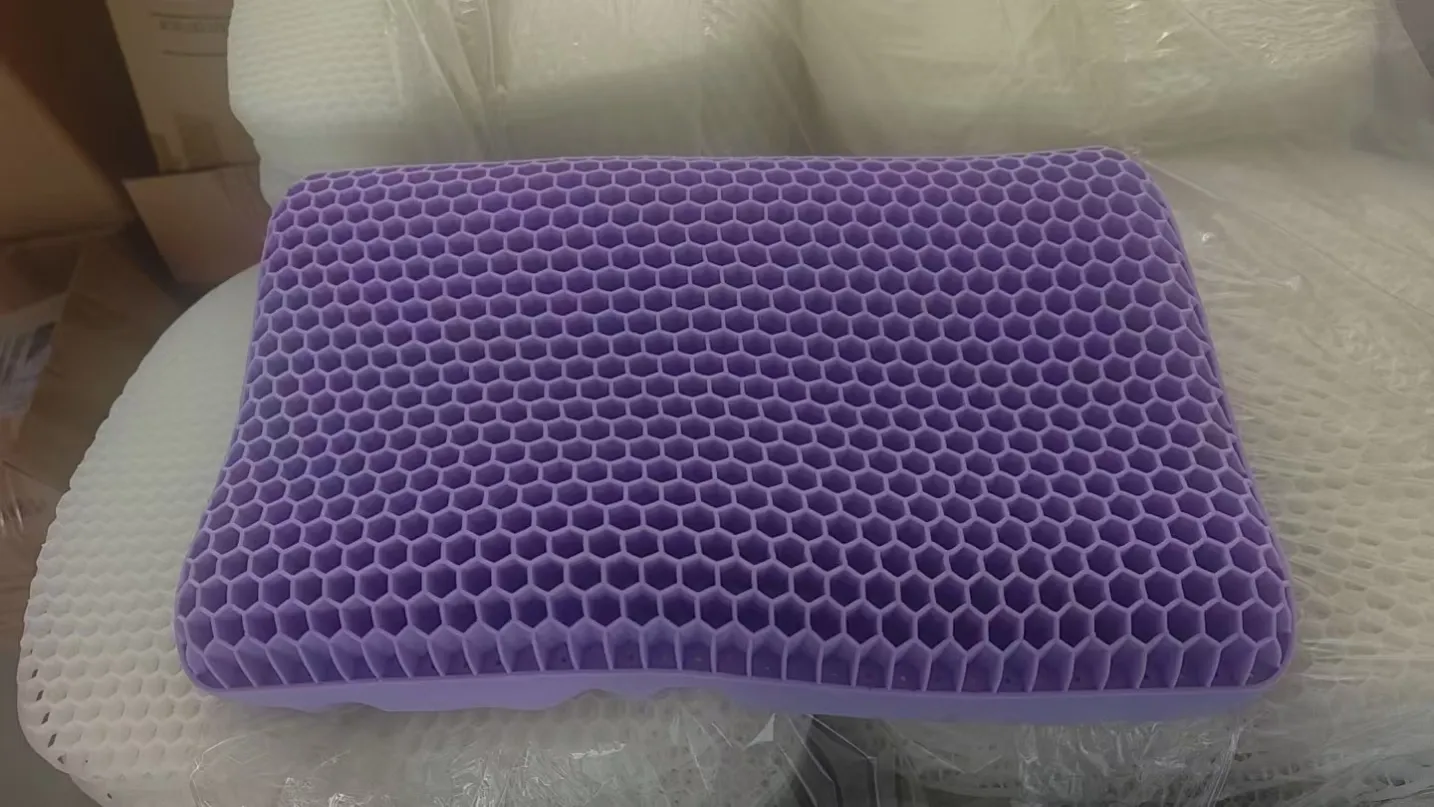
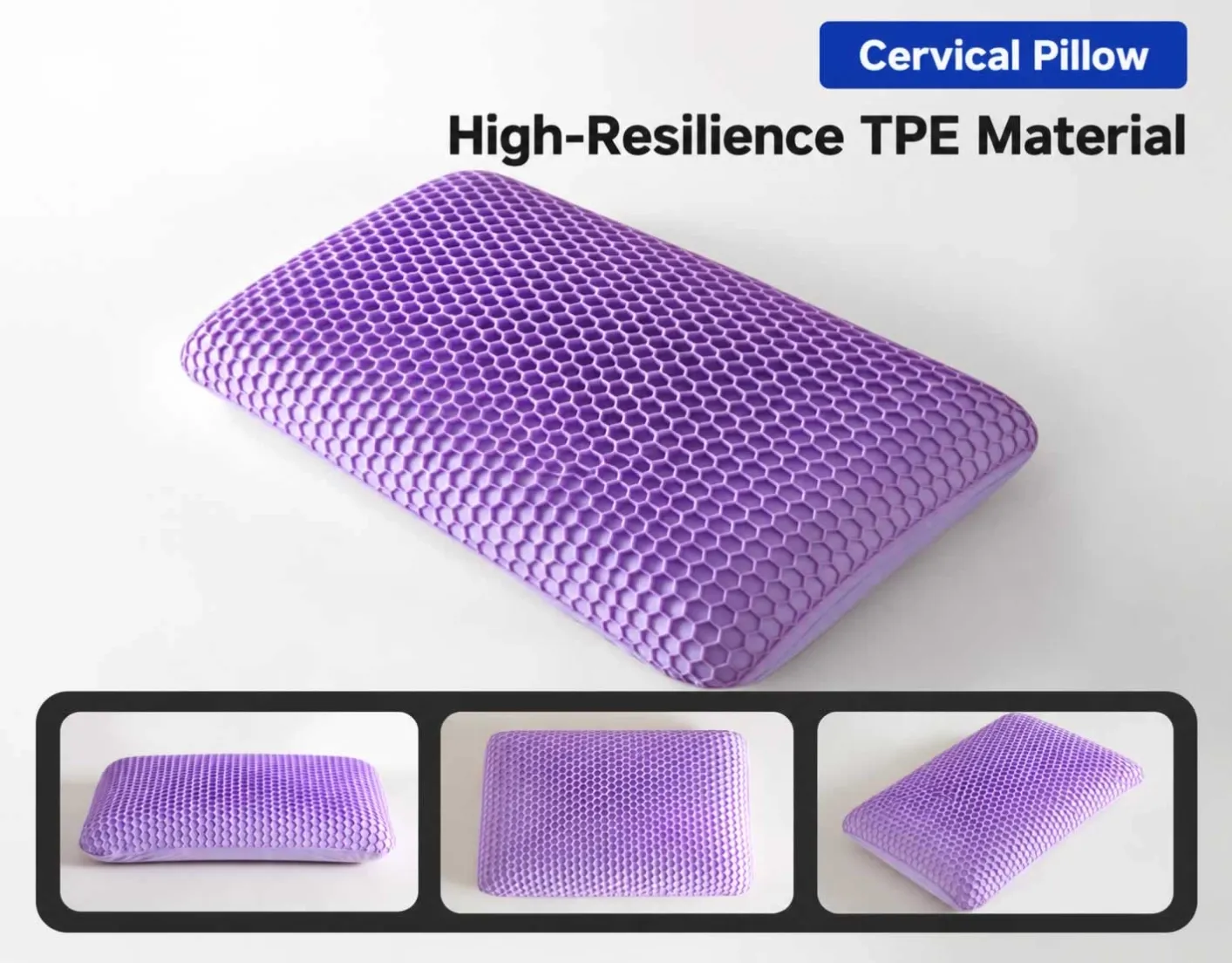
Instead of using a predominantly solid comfort layer, TPE Grid uses an engineered three-dimensional elastic structure with open spaces throughout the material.
For sleep brands, the important question is not simply “TPE Grid or foam?”
A better question is:
How can each material be used to create a better and more differentiated product?
1. Solid Foam vs. Open Grid Architecture
The biggest difference begins with physical construction.
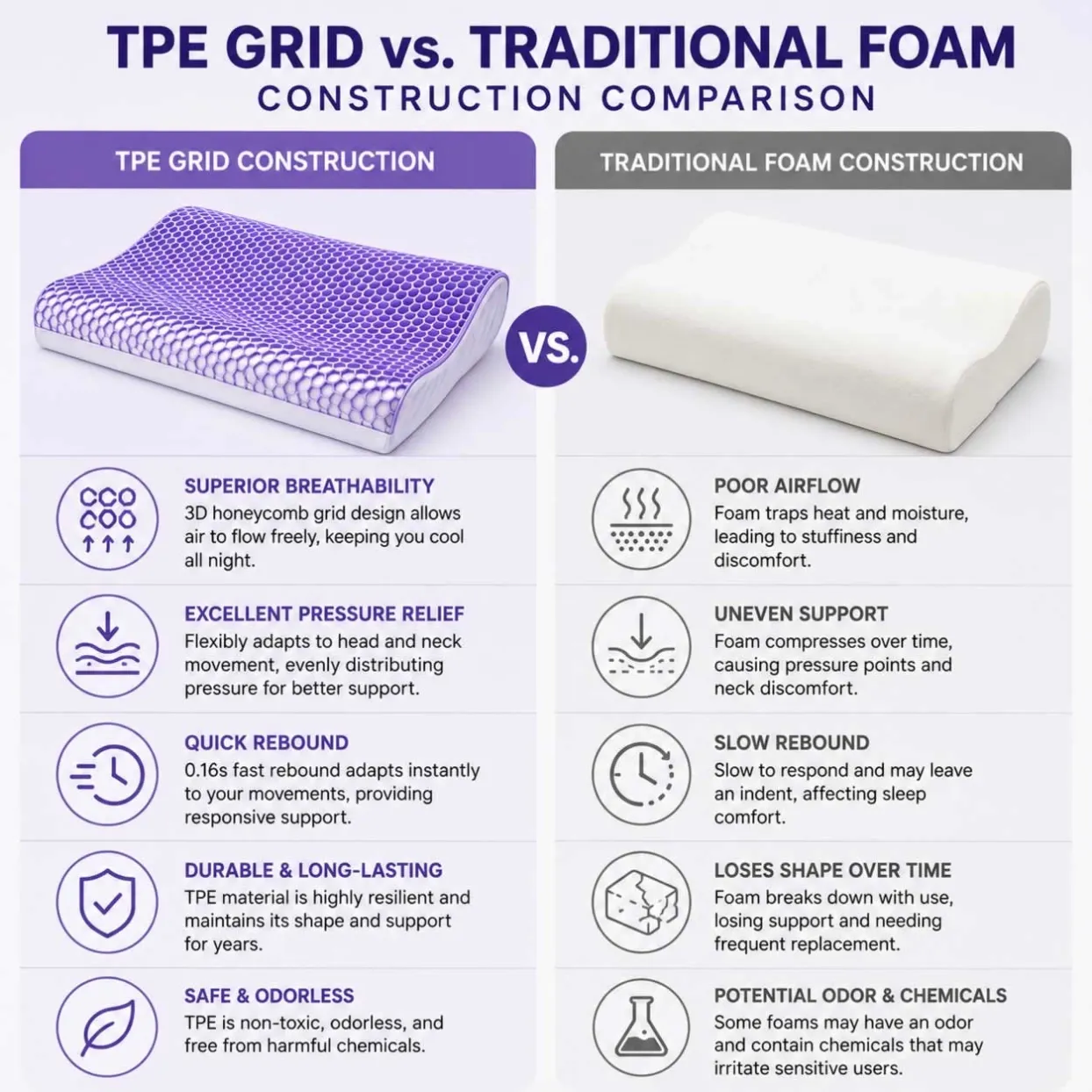
Traditional foam creates a continuous cushioning layer. Depending on its formulation, density and cell structure, it can provide anything from soft cushioning to firm structural support.
TPE Grid works differently.
Its three-dimensional grid contains interconnected open spaces between flexible TPE walls. The structure can deform locally when pressure is applied and recover as the load changes.
This gives product designers two fundamentally different material architectures:
Traditional Foam: continuous cushioning structure.
TPE Grid: open, elastic and geometrically engineered structure.
This difference affects airflow, response, product appearance and how the material can be integrated into a finished sleep product. TPE Grid Factory currently uses this open-grid approach across pillows, mattress toppers and component sheets.
2. Airflow: Open Structure Creates a Different Design Option
Airflow is increasingly important in cooling and breathable sleep-product development.
Foam performance varies significantly according to formulation and structure. Open-cell foams, perforations and ventilation channels can all be engineered to improve airflow.
TPE Grid takes another approach.
Because open spaces are built directly into the three-dimensional structure, physical air channels remain visible throughout the grid.
This can be particularly useful when developing:
Cooling pillows
Breathable mattress toppers
Hybrid mattresses
Summer bedding collections
Ventilated comfort products
The final thermal performance still depends on the complete construction — including fabric, foam, TPE thickness and surrounding environment — but an open grid gives product developers another engineering option when ventilation is a priority.
3. Slow-Rebound Comfort vs. Responsive Elasticity
Memory foam is recognized for its slow-response behavior.
It gradually conforms under pressure, creating the enveloping sensation many consumers associate with memory foam pillows and mattresses.
TPE Grid offers a different feel.
The elastic grid responds quickly when pressure is applied or removed. Individual sections of the structure can flex according to the load while maintaining a more responsive surface.
Neither behavior is universally better.
They simply create different comfort experiences.
For brands, this creates an interesting opportunity:
Memory Foam → Contouring + Slow Response
TPE Grid → Responsive Elasticity + Open Structure
This is exactly why hybrid construction can be more commercially interesting than treating the materials as competitors.
4. Product Differentiation: What Can the Customer Actually See?
Traditional foam technology is often hidden.
Two pillows may use different foam densities or formulations while appearing almost identical from the outside.
TPE Grid creates a much more visible material story.
Honeycomb, square and other geometric grid structures can become part of the product design itself.
Brands can demonstrate the material through:
Cutaway photography
Compression demonstrations
Stretch tests
Airflow videos
Transparent or removable covers
Retail packaging
Showroom samples
This gives marketing teams a tangible technology to explain.
For private-label sleep brands competing against hundreds of similar memory foam products, visible differentiation can be commercially valuable.
5. Does TPE Grid Need to Replace Foam?
No.
For many established sleep brands, replacing foam completely may not even be the best product-development strategy.
You may already have:
Proven memory foam formulations
Existing pillow molds
Mattress production lines
Established suppliers
Successful products
Customer reviews
Retail distribution
There is no reason to abandon all of that simply to introduce a new material.
Instead, TPE Grid can become an additional comfort layer.
TPE Grid + Foam: A Practical Hybrid Strategy
Hybrid construction allows each material to perform a different function.
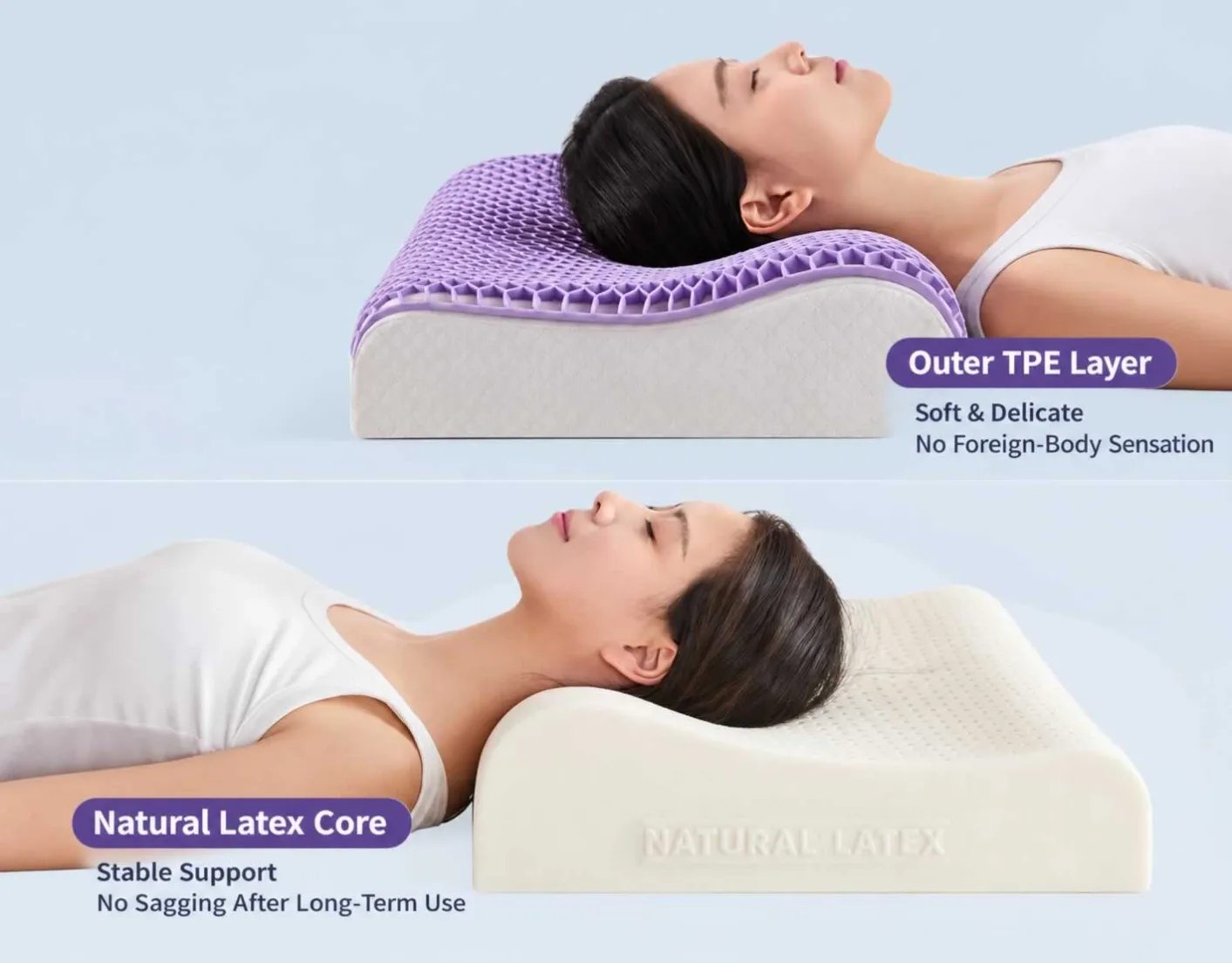
TPE Grid + Molded Memory Foam
TPE Grid provides a responsive open surface while memory foam maintains familiar contouring comfort.
This can be suitable for brands developing premium ergonomic or breathable pillows.
TPE Grid + Shredded Memory Foam
The grid provides structured surface support while shredded memory foam creates adjustable loft and mouldable comfort.
TPE Grid Factory already produces this type of hybrid pillow construction for B2B product development.
TPE Grid + Foam Mattress
Mattress manufacturers can evaluate TPE Grid as an upper comfort layer while retaining existing memory foam, PU foam or spring systems underneath.
This allows established factories to introduce a new material without completely rebuilding their manufacturing process.
6. TPE Grid Sheets Give Existing Manufacturers More Flexibility
Some brands need finished pillows or mattress toppers.
Others already have their own manufacturing capabilities.
For these companies, TPE Grid sheets and components may be more attractive.
A memory foam pillow manufacturer, for example, can retain its existing:
Foam Core + Sewing + Cover + Packaging + Branding
and source only the customized TPE Grid component.
The same model works for mattress manufacturers.
This makes TPE Grid particularly relevant for factories looking for a material upgrade rather than another finished-product supplier.
Which Construction Is Right for Your Product?
There is no universal answer.
The right construction depends on what your brand is trying to achieve.
If you want deep contouring and familiar slow-response comfort, memory foam may remain an important part of the product.
If you are exploring responsive support, visible material differentiation and an open comfort structure, TPE Grid may provide a new direction.
And if you want both?
A TPE Grid + Foam Hybrid Construction may be the most practical place to start.
Important development variables include:
TPE thickness, grid geometry, firmness, foam density, product dimensions, TPE color, layer position and target retail price.
These should be evaluated through prototypes rather than selected from specifications alone.
Upgrade Your Existing Foam Product with TPE Grid
If your company already sells memory foam pillows, foam mattresses, cooling pillows or mattress toppers, you do not necessarily need to develop a completely new product from zero.
Start with your existing bestseller.
We provide customized TPE Grid sheets, TPE + memory foam pillows, TPE Grid mattress layers, mattress toppers and OEM/ODM hybrid solutions for global sleep brands and manufacturers.
Send us your:
Existing product dimensions + foam construction + target TPE thickness + desired firmness + estimated quantity.
We can evaluate how TPE Grid could be integrated into your current construction and recommend suitable samples for prototype testing.
Keep what already works. Add a new material layer that gives your next collection a reason to be different.