Oct 24, 2026new
TPE Grid vs Memory Foam vs Latex: Which Material Fits Your Pillow Line?
Compare TPE Grid, Memory Foam and Latex for pillow development. Learn how sleep brands and manufacturers choose materials for premium hybrid pillow collections.
For sleep brands, pillow manufacturers and bedding companies, choosing the right pillow material is one of the most important decisions when developing a new product collection.
Memory foam, latex and TPE Grid each have different structural characteristics. There is no single material that is perfect for every pillow category.
The better question for a product developer is:
Which material combination best matches your target customers, price positioning and pillow strategy?
At TPE Grid Factory, we work with sleep brands, pillow manufacturers and wholesalers to develop TPE Grid pillows and hybrid pillow solutions.
This article compares TPE Grid, Memory Foam and Latex from a B2B product-development perspective.
Memory Foam Pillow: A Proven Market Solution
Memory foam has been one of the most widely used materials in the sleep industry for many years.
For pillow brands, memory foam offers several advantages:
- Established consumer recognition
- Mature manufacturing technology
- Multiple density and firmness options
- Easy integration into ergonomic pillow designs
- Strong market acceptance
A typical memory foam pillow uses a molded foam core to create contouring support.
For many brands, memory foam remains a reliable foundation product.
However, manufacturers also face some challenges.
Because memory foam is already widely available in the market, many pillow products can look similar.
For brands competing in premium sleep categories, the challenge becomes:
How can we create a more differentiated pillow instead of another standard memory foam model?
This is where hybrid solutions become interesting.
Latex Pillow: Natural Material Positioning
Latex is another popular pillow material, especially among brands focused on natural bedding and premium sleep products.
Latex pillows are often positioned around:
- Natural material concepts
- Elastic response
- Long-term resilience
- Premium bedding collections
-
For latex pillow manufacturers, the material itself is often an important part of the brand story.
However, latex also has product-development considerations.
Different latex formulations, densities and manufacturing methods can create different comfort experiences.
Brands also need to consider:
- Material sourcing
- Weight
- Cost positioning
- Target customer expectations
- Product differentiation
For manufacturers already producing latex pillows, adding another comfort layer can create opportunities for new product categories.
TPE Grid: A New Hybrid Pillow Component
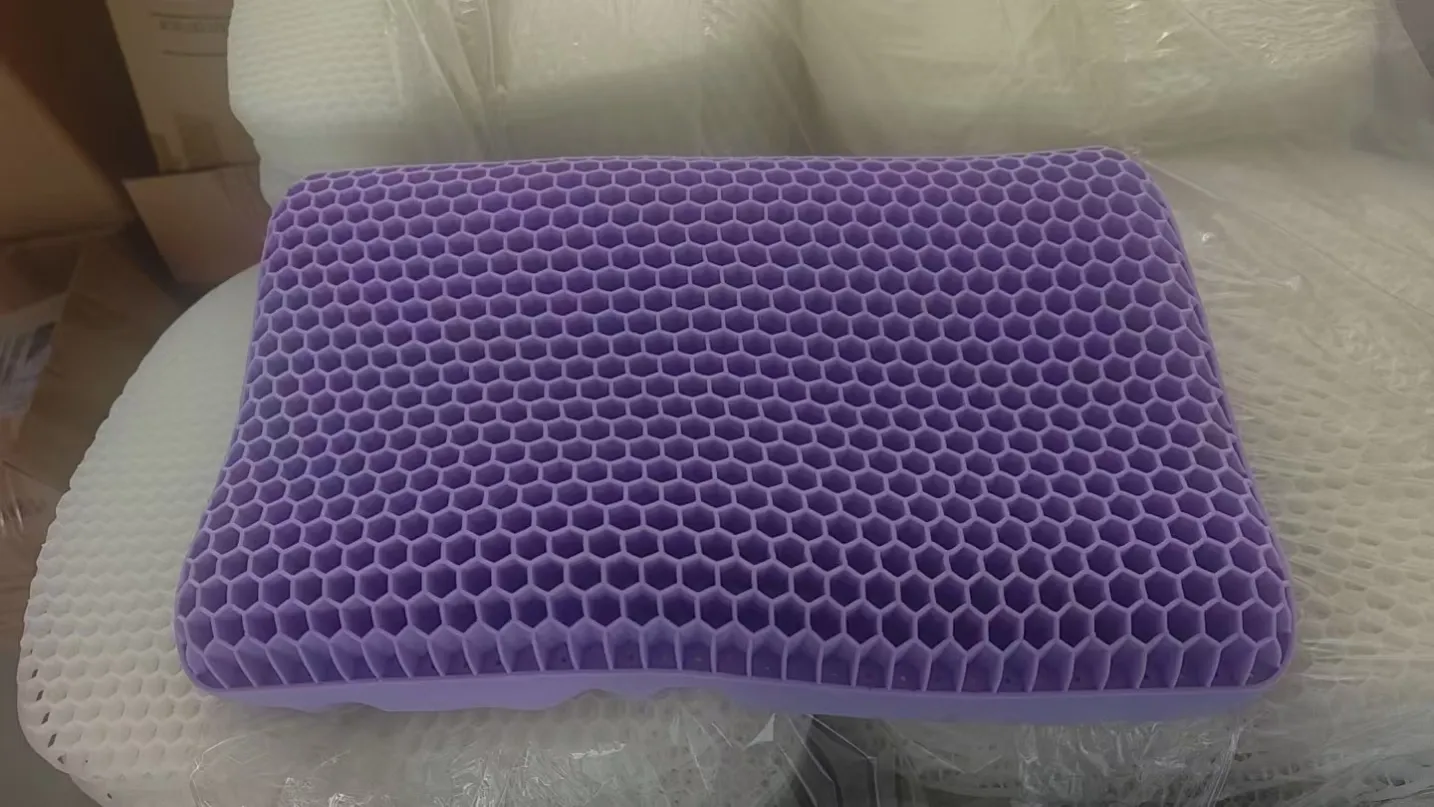
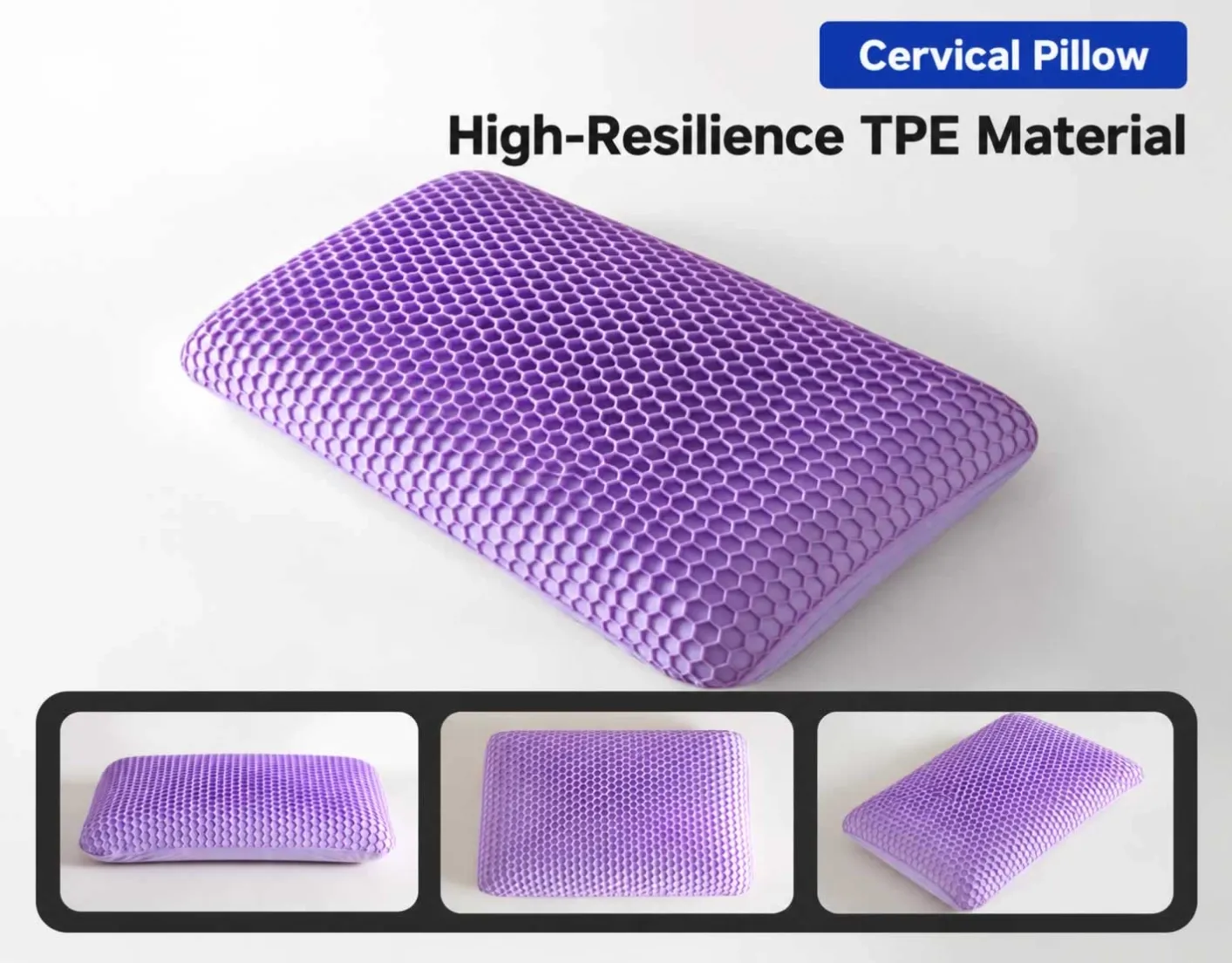
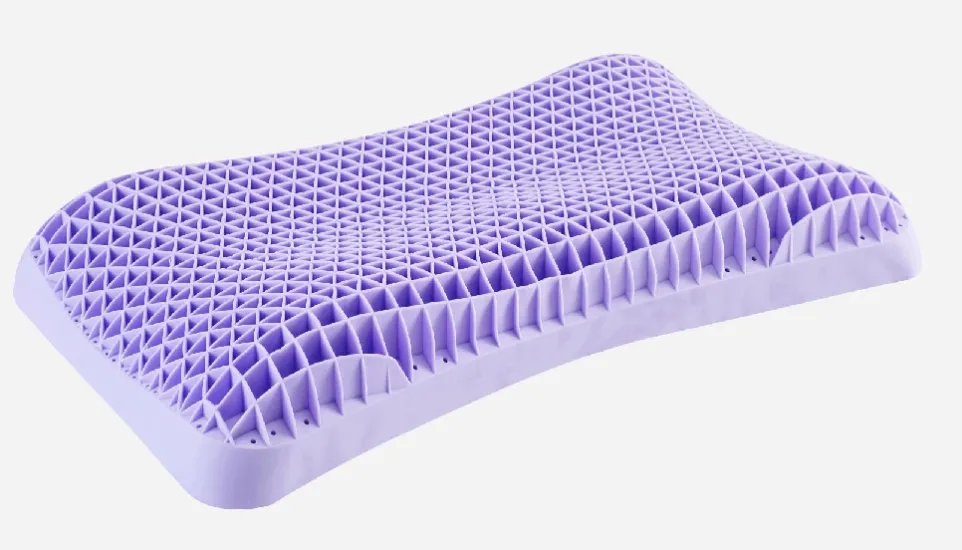
TPE Grid is a three-dimensional flexible material structure that can be used as a pillow comfort layer or integrated component.
Unlike traditional solid foam or latex structures, TPE Grid uses an open grid design.
For pillow development, TPE Grid is commonly evaluated in combination with:
- Memory foam
- Latex
- Shredded memory foam
- Microfiber filling
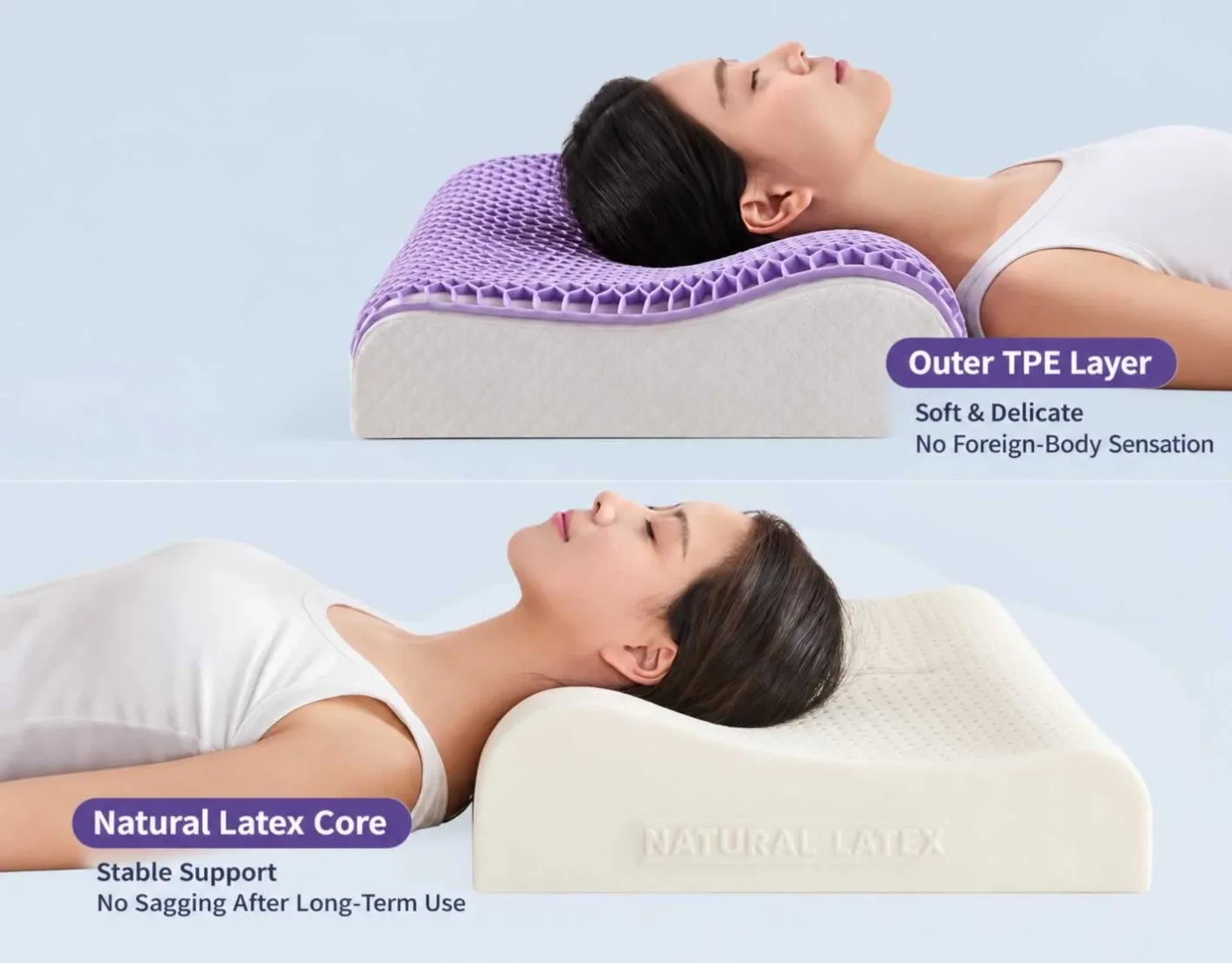
A typical hybrid construction may look like:
Stretch Cover
↓
TPE Grid Comfort Layer
↓
Memory Foam / Latex Core
The purpose is not necessarily to replace memory foam or latex.
Instead, TPE Grid gives manufacturers another way to create a differentiated pillow collection.
TPE Grid vs Memory Foam: Product Development Comparison
Structure
Memory Foam:
A continuous foam structure designed for slow-response contouring.
TPE Grid:
A three-dimensional grid structure with open spaces throughout the material.
Product Positioning
Memory Foam:
Suitable for traditional ergonomic and comfort pillow categories.
TPE Grid:
Suitable for premium hybrid pillows, technology-focused sleep products and differentiated collections.
Manufacturing Strategy
Memory Foam:
Often requires existing foam molds and established production processes.
TPE Grid:
Can be supplied as a separate component and integrated with existing pillow cores.
This is especially useful for manufacturers that already produce memory foam pillows and want to develop a new product without rebuilding their entire production system.
TPE Grid vs Latex: Product Development Comparison
Latex:
- Strong natural-material positioning
- Elastic feel
- Premium bedding applications
TPE Grid:
- Visible technology structure
- Flexible grid design
- Suitable for hybrid product concepts
For latex pillow brands, TPE Grid can become an additional layer rather than a replacement material.
xample:
Existing Latex Pillow
-
TPE Grid Comfort Layer
=
New Hybrid Latex + TPE Pillow Collection
This allows brands to maintain their existing latex expertise while introducing a new product concept.
Should Pillow Brands Replace Existing Materials with TPE Grid?
Usually, the answer is not replacement.
For many manufacturers, the most practical approach is upgrading existing products.
Examples:
Existing Memory Foam Pillow
Add TPE Grid layer
↓
Develop TPE + Memory Foam Hybrid Pillow
Existing Latex Pillow
Add TPE Grid layer
↓
Develop Premium Latex Hybrid Pillow
Existing Shredded Foam Pillow
Add TPE Grid structure
↓
Develop New Adjustable Comfort Pillow
This approach allows brands to use their current:
- Pillow cores
- Production equipment
- Covers
- Packaging systems
- Customer channels
while creating a new product category.
How Should Buyers Choose Between TPE Grid, Memory Foam and Latex?
Before selecting a material, buyers should consider:
Target Customer
Are you selling:
- Mainstream sleep products?
- Premium bedding?
- Natural sleep products?
- Technology-focused pillows?
Existing Product Line
Do you already manufacture:
- Memory foam pillows?
- Latex pillows?
- Hybrid mattresses?
- Ergonomic pillows?
Product Differentiation
Do you need:
- A proven traditional product?
- A premium upgrade?
- A new visible technology feature?
Production Strategy
Do you want:
- A complete finished pillow?
- A component supplier?
- A hybrid product development partner?
The right answer depends on your business model.
Why Many Sleep Brands Are Exploring TPE Grid Hybrid Pillows
The sleep market is becoming increasingly competitive.
Brands are looking for products that combine:
- Familiar comfort
- New material technology
- Better product storytelling
- Premium positioning
TPE Grid provides a way to create a new pillow category while working together with established materials like memory foam and latex.
For many companies, the opportunity is not choosing between TPE Grid, memory foam or latex.
The opportunity is combining materials intelligently.
Looking for a TPE Grid Pillow Development Partner?
TPE Grid Factory supplies TPE Grid sheets, hybrid pillow components and customized TPE Grid pillow solutions for international B2B customers.
We work with:
- Memory foam pillow manufacturers
- Latex pillow brands
- Sleep product companies
- Bedding wholesalers
- Private label brands
- OEM pillow developers
Available solutions include:
- TPE Grid sheets
- TPE + Memory Foam pillows
- TPE + Latex pillow development
- Custom sizes
- Custom colors
- Private label covers
- OEM packaging
If you are developing a new pillow collection and want to evaluate whether TPE Grid fits your product strategy, send us:
Current pillow material + target market + pillow size + required specifications + estimated quantity.
We can help evaluate a suitable TPE Grid solution and start with sample development.