Oct 24, 2026new
TPE Grid Sheet for Upholstered Ottomans: A New Comfort Layer Over HR Foam
TPE Grid sheet for upholstered ottomans and footstools. Explore TPE + HR foam hybrid comfort solutions for furniture brands and manufacturers.
Comfort innovation in upholstered furniture does not always require redesigning the entire product.
Sometimes, upgrading a single comfort layer can create a noticeably different user experience.
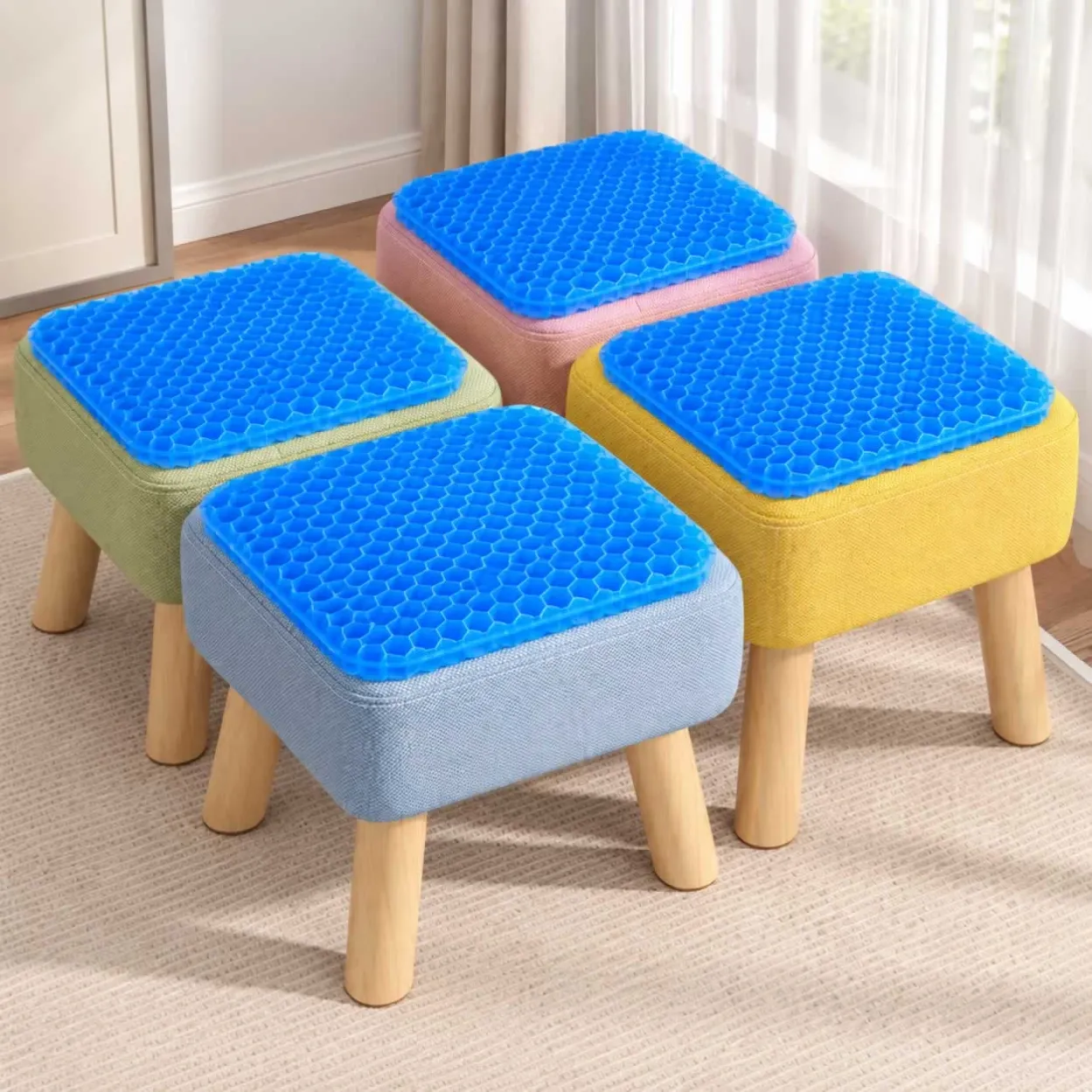
One emerging application is the use of a TPE Grid sheet over high-resilience (HR) foam in upholstered ottomans and footstools.
We recently worked on a product concept using 42x38x3cm and 48x45x3.5cm TPE Grid sheet as the upper comfort layer of a soft upholstered ottoman.
The objective is straightforward:
Use the flexible TPE Grid above HR foam to create a softer, responsive surface for the heels and lower legs during prolonged use.
For furniture brands and manufacturers looking for new comfort materials, this hybrid construction provides an interesting alternative to traditional foam-only upholstery.
Why Use TPE Grid in an Ottoman?
An ottoman is often considered a simple furniture accessory, but its comfort requirements are different from those of a conventional seat cushion.
When a person sits or reclines on a sofa, they may place their:
Heels
Ankles
Lower calves
Part of the lower legs
directly on the ottoman for extended periods.
These areas create localized contact points against the upholstery surface.
Traditional HR foam provides excellent underlying support, but furniture manufacturers can add another comfort layer above the foam to modify the surface feel.
This is where TPE Grid technology becomes relevant.
TPE Grid + HR Foam Hybrid Construction
For this application, the TPE Grid is not intended to replace the supporting foam.
Instead, the two materials perform different roles within a hybrid structure.
A typical construction can be:
Upholstery Fabric
↓
42x38x3cm or 48x45x3.5cm TPE Grid Layer
↓
High-Resilience Foam
↓
Ottoman Base
The HR foam provides the main support and maintains the shape of the upholstered furniture.
The TPE Grid functions as the upper responsive comfort layer.
Under pressure, the flexible grid structure deforms locally around the contact area. When pressure is removed, the elastic structure recovers.
For furniture product developers, this creates another way to tune surface comfort without completely changing the existing foam construction.
Designed for Heel and Lower-Leg Comfort
When an ottoman is used together with a sofa or recliner, the user's weight is not distributed in exactly the same way as when sitting on a chair.
The heels and lower legs can create relatively concentrated contact areas.
A flexible grid layer allows different sections of the surface to respond independently to these contact points.
The design objective is therefore not simply to make the ottoman “softer.”
Instead, it is to develop a surface that provides adaptive cushioning and improved pressure distribution across the contact area.
This can be particularly relevant for furniture designed around:
Long-duration lounging
Reclining comfort
Home theater seating
Premium sofas
Modular lounge furniture
Comfort-focused ottomans
Actual pressure-distribution performance should be validated on the finished furniture construction, particularly if a brand intends to make quantified pressure-relief claims.
Why Use a 30mm TPE Grid Layer?
For this project, the TPE Grid sheet measures:
42x38x3cm
The 30mm thickness makes the TPE Grid a substantial comfort layer rather than simply a thin surface film.
However, thicker is not automatically better.
he ideal TPE Grid specification depends on several factors:
HR foam firmness — A softer or firmer base changes the overall feel.
Grid hardness — TPE formulation influences elasticity and resistance.
Cell geometry — Grid structure affects how the surface responds under load.
Wall thickness — This can influence the support characteristics of the grid.
Upholstery fabric — A tightly stretched cover can alter how the user experiences the TPE layer.
For new furniture development, these parameters should be tested as a complete system.
An Upgrade for Existing Foam Furniture
One of the most practical advantages of this construction is that furniture manufacturers may not need to abandon their existing foam platform.
A manufacturer already producing an ottoman with HR foam could evaluate adding TPE Grid as an upper comfort layer.
The development path can be relatively straightforward:
Existing Ottoman
→ Add TPE Grid Layer
→ Prototype Upholstery
→ Evaluate Comfort
→ Adjust Grid/Foam Combination
→ Pilot Production
This makes TPE Grid particularly interesting for brands developing a premium version of an existing furniture collection.
Rather than introducing another foam density alone, the manufacturer gains a new structural component that can also become part of the product story.
Beyond Ottomans: TPE Grid for Upholstered Furniture
The same concept can potentially be evaluated across other soft-furniture applications.
Examples include:
Sofa Seat Cushions — TPE Grid over foam as an additional responsive comfort layer.
Chaise Lounges — For areas supporting the legs during reclining.
Recliners — TPE components for seat, leg-rest or back-support development.
Bench Cushions — Hybrid TPE + foam construction for prolonged sitting.
Office Seating — TPE Grid integrated with existing foam cushions.
Modular Lounge Furniture — Customized TPE dimensions for different furniture modules.
For manufacturers, this means TPE Grid does not have to be treated as a single finished product. It can be sourced as an engineered furniture comfort component.
Custom TPE Grid Sheets for Furniture Manufacturers
Different furniture designs require different specifications.
For OEM and B2B projects, TPE Grid development can be discussed according to:
Length and width
Grid thickness
TPE hardness
Cell geometry
Wall thickness
Product weight
Color
Supporting foam
Finished furniture construction
Some customers may require only TPE Grid sheets for integration in their own factory.
Others may need assistance developing a TPE + foam hybrid construction.
This flexibility is important for established furniture manufacturers that already have their own foam cutting, upholstery, sewing and assembly capabilities.
Looking for a TPE Grid Supplier for Furniture Applications?
TPE Grid Factory supplies TPE Grid sheets and customized TPE comfort components for B2B product development.
We work with furniture brands, upholstered furniture manufacturers, sofa manufacturers, seating-product companies, wholesalers and product developers exploring new applications for TPE Grid technology.
If you are developing an ottoman, sofa cushion, recliner, bench or other upholstered product, send us:
Product drawing or photo + required TPE dimensions + thickness + existing foam construction + target firmness + estimated order quantity.
For projects similar to this 42x38x3cm,48x45x3.5cm TPE Grid + HR foam ottoman construction, samples can be evaluated before moving toward larger-volume production.
You don't always need to redesign the furniture. Sometimes the innovation is inside the comfort layer.