Sep 21, 2026new
TPE Grid + Memory Foam Pillow: A Hybrid Upgrade for Sleep Brands
Develop TPE Grid + memory foam pillows with custom TPE thickness, hardness, covers, colors and private label packaging. OEM hybrid pillow solutions for sleep brands and manufacturers.
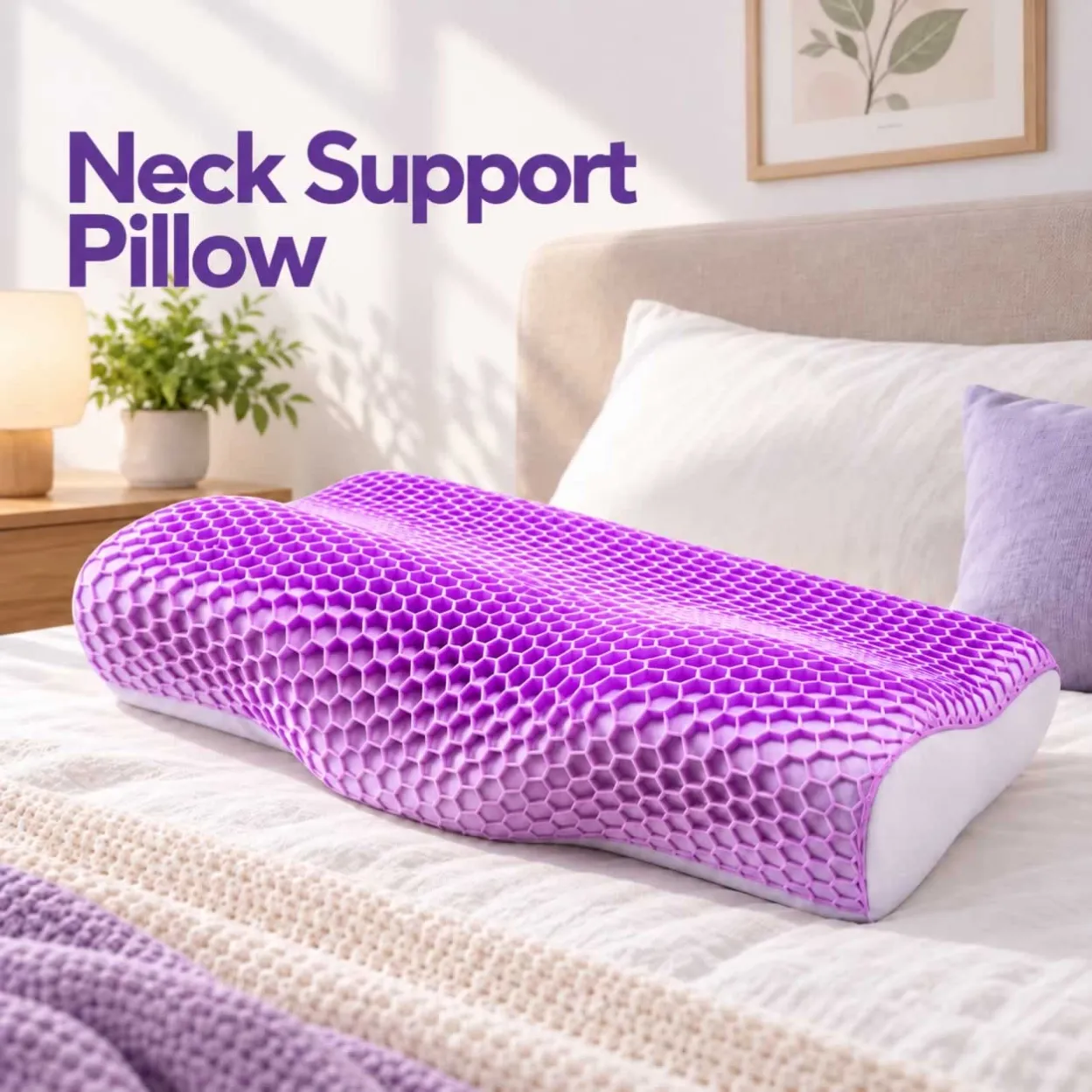
For established sleep brands, developing a new pillow does not always mean replacing memory foam with an entirely different material.
A growing product-development direction is to combine TPE Grid with a memory foam core, creating a hybrid pillow that brings two different material behaviors into one construction.
Recently, we received an inquiry from a German customer with a clear requirement:
“We want to do TPE Grid with memory foam core.”
This simple request reflects an important opportunity for pillow manufacturers, bedding brands and wholesalers: use their existing memory foam expertise while adding a visible TPE Grid comfort layer to create a new premium product.
What Is a TPE Grid + Memory Foam Pillow?
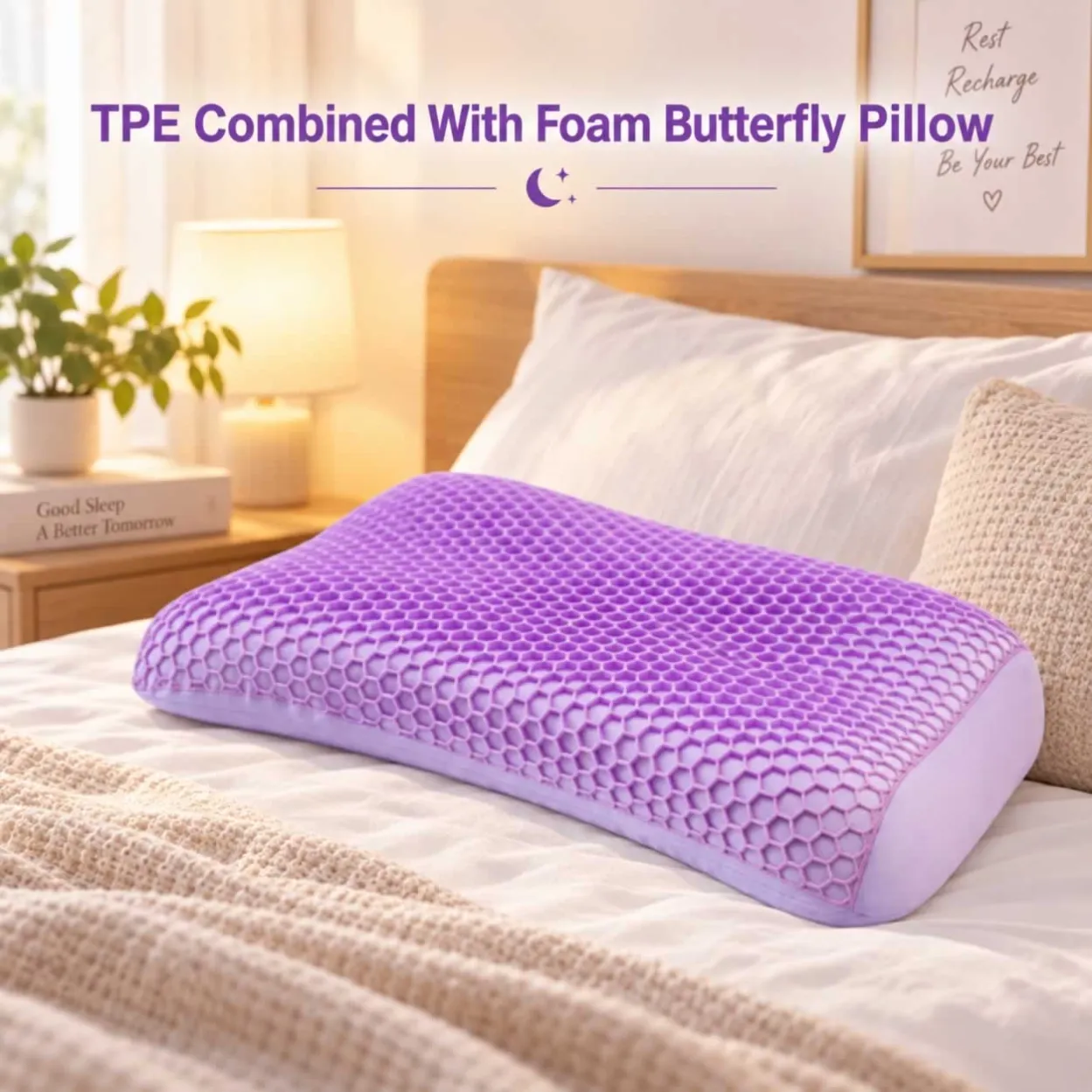
A hybrid TPE pillow typically combines:
Removable Fabric Cover
↓
TPE Grid Comfort Layer
↓
Memory Foam Core
The memory foam remains the main support core, while the TPE Grid becomes an additional upper comfort structure.
The two materials behave differently.
Memory foam provides a slower-response contouring feel, while flexible TPE Grid compresses more responsively and contains an open three-dimensional structure.
The objective is not to claim that TPE is universally better than memory foam. Instead, the hybrid construction allows each material to perform a different role within the pillow.
Upgrade an Existing Memory Foam Pillow
This approach is particularly useful for manufacturers that already have successful memory foam pillow models.
You may already have:
- Existing memory foam molds
- Established foam density and firmness
- Current pillow dimensions
- Cover suppliers
- Packaging
- Existing retail customers
-
Instead of rebuilding the entire production system, the manufacturer can evaluate adding a TPE Grid layer to the current pillow core.
A typical development route is:
Existing Memory Foam Pillow → Add TPE Grid → Adjust Cover → Test Sample → Launch New Hybrid Model
This makes TPE Grid suitable not only for new brands, but also for established pillow manufacturers looking to refresh an existing collection.
Why Combine TPE Grid with Memory Foam?
The main advantage is product differentiation.
The TPE Grid provides an open structure with physical airflow pathways, while the memory foam underneath provides contouring support.
For brands, this creates several product-development themes:
Responsive Surface
The grid structure can deform locally and recover after pressure is removed.
Open Structure
The honeycomb or grid geometry creates physical spaces through the comfort layer.
Familiar Memory Foam Support
Customers can still experience a material they already understand.
Visible Technology
The TPE Grid can be shown in product photography, cutaway graphics and compression videos.
This is especially useful for e-commerce brands that need to explain product differences visually.
Different Ways to Build a Hybrid TPE Pillow
There is more than one way to combine TPE with memory foam.
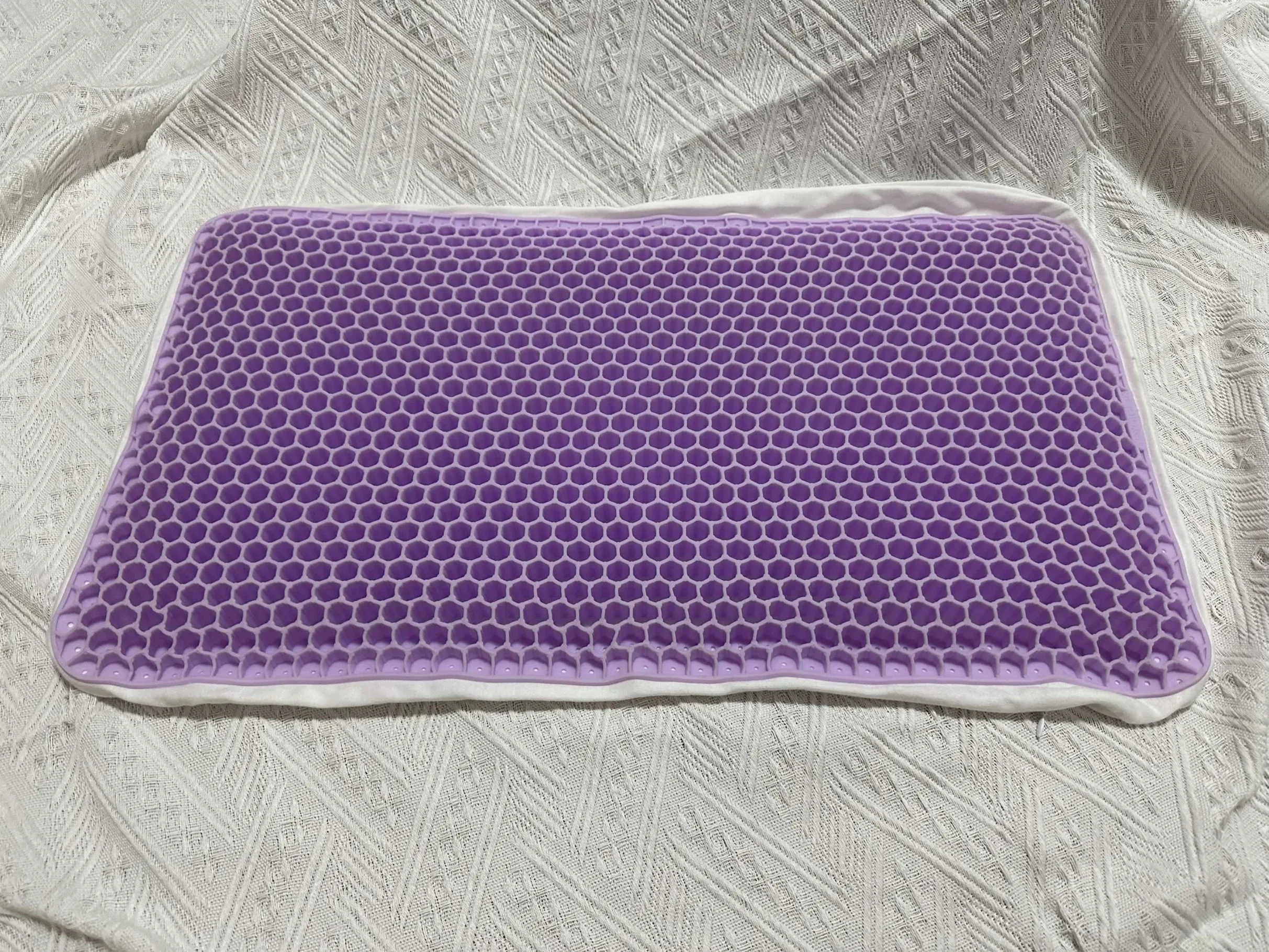
One option is a thin TPE Grid sheet over an existing molded memory foam pillow.
Frequently requested TPE Grid sheet sizes include:
60 × 45 × 1.2 cm
70 × 45 × 1.2 cm
Another option is a thicker TPE Grid Pillowcase, such as a 70 × 40 × 2.2 cm structure, surrounding or covering the memory foam core.
Brands can also develop a complete ergonomic pillow where the TPE Grid is integrated into selected comfort zones.
The correct construction depends on the target pillow size, height, firmness and customer positioning.
TPE Hardness and Memory Foam Firmness Must Work Together
One of the most important parts of product development is balancing the two materials.
A soft TPE Grid placed over very soft memory foam will feel different from the same TPE Grid used over a firmer molded foam core.
Important parameters include:
- TPE hardness
- Grid thickness
- Cell geometry
- Grid wall thickness
- Memory foam density
- Memory foam firmness
- Pillow height
- Cover stretch
-
For this reason, selecting TPE based only on a Shore hardness number is not enough.
The complete pillow should be tested physically.
Cover Fabric Is Also Important
The outer cover can strongly influence the final feel of a TPE Grid + Memory Foam Pillow.
Brands can evaluate:
Stretch fabric, allowing the cover to follow the grid movement more easily.
Cooling-positioned fabric, for products aimed at warm sleepers.
Nylon-spandex fabric, for a soft, flexible and close-fitting premium surface.
Breathable knitted fabric, for general sleep-product applications.
Hidden zippers, custom labels and removable washable covers can also be developed for private-label projects.
OEM and Private Label Development
For sleep brands and wholesalers, a TPE Grid + memory foam pillow can be customized in multiple ways:
Pillow dimensions
Memory foam shape
TPE thickness
TPE hardness
Grid design
TPE color
Cover fabric
Custom logo
Woven labels
Retail box
E-commerce packaging
A practical development process is:
Product Brief → Existing Pillow Review → TPE Selection → Sample → Comfort Testing → Adjustment → Pilot Order → Bulk Production
Starting with samples helps reduce risk before larger-scale manufacturing.
Looking for a TPE Grid + Memory Foam Pillow Manufacturer?
TPE Grid Factory is a China-based manufacturer and supplier of TPE Grid pillows, TPE Grid sheets and customized hybrid sleep-product components for global B2B customers.
We work with memory foam pillow manufacturers, sleep brands, bedding wholesalers, distributors and private-label companies developing new TPE hybrid products.
If you already have a memory foam pillow, send us your pillow dimensions, foam shape, target TPE thickness, firmness, cover requirements and estimated quantity.
We can help evaluate how to integrate TPE Grid into your existing product and start with sample development.