Oct 24, 2026new
TPE Grid for Sofa Cushions: A New Comfort Layer for Furniture Manufacturers
TPE Grid sheets for sofa cushions and upholstered furniture. Develop TPE + HR foam hybrid comfort layers with custom sizes, thicknesses and OEM solutions for furniture manufacturers.
Sofa innovation is no longer limited to fabrics, styling and traditional foam combinations.
As furniture brands look for new ways to improve sitting comfort and differentiate premium collections, TPE Grid sheets are emerging as an interesting comfort component for upholstered sofas and seating products.
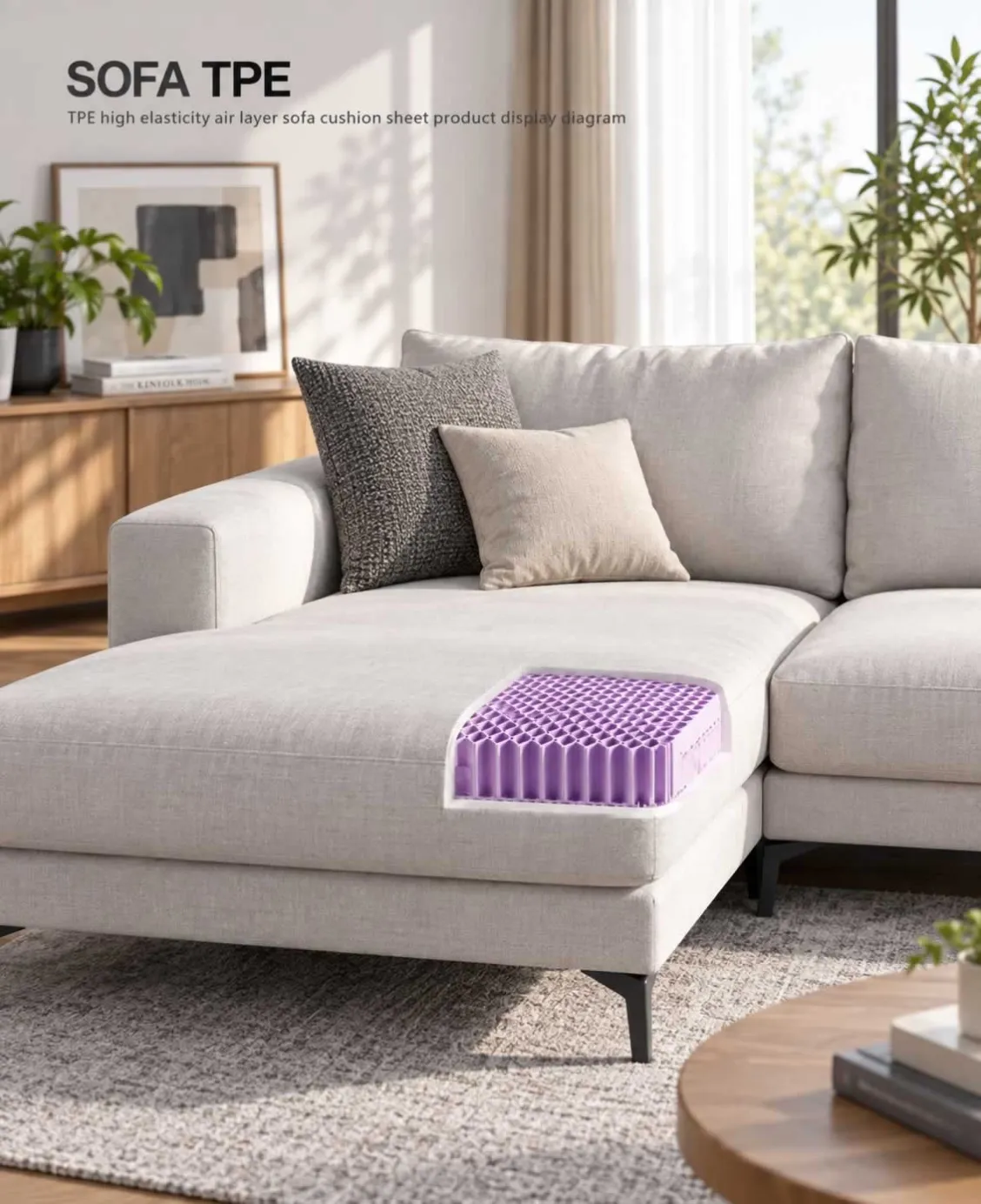
Instead of replacing the entire sofa cushion, TPE Grid can be integrated as a flexible upper layer over conventional supporting materials such as high-resilience foam, PU foam or memory foam.
For sofa manufacturers, furniture brands and component suppliers, this creates a practical development direction:
Keep the existing support structure and upgrade the comfort layer.
What Is TPE Grid for Sofa Cushions?
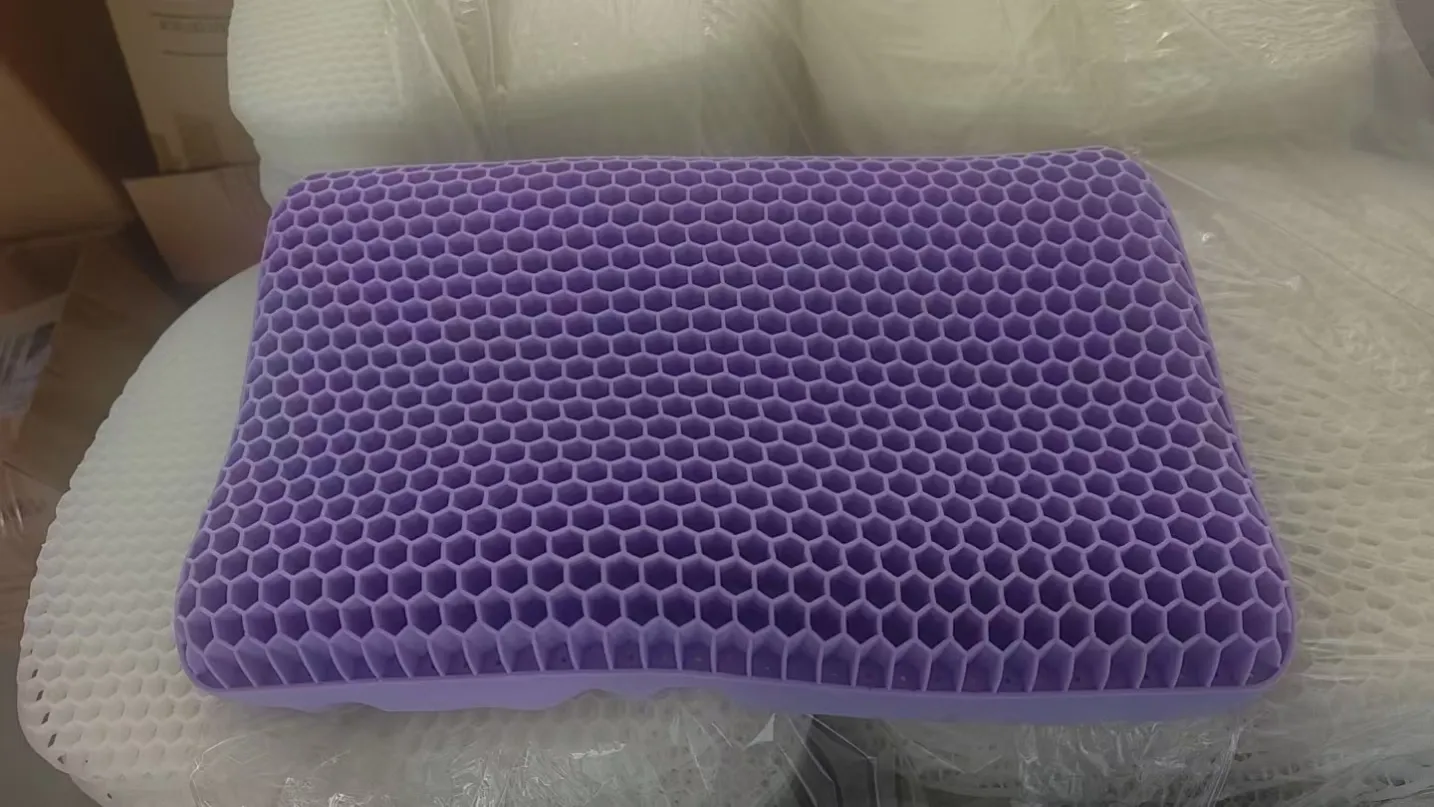
TPE Grid is a three-dimensional flexible structure manufactured from thermoplastic elastomer (TPE).
Unlike a solid foam sheet, the material consists of interconnected elastic grid walls with open spaces throughout the structure.
When used inside a sofa cushion, the grid can flex locally under body pressure and recover after the load is removed.
The material can therefore be considered as an additional responsive comfort layer within a multi-layer sofa construction.
A typical concept may look like:
Upholstery Fabric
↓
TPE Grid Comfort Layer
↓
HR Foam / PU Foam / Memory Foam
↓
Supporting Cushion Structure
The foam continues to provide the primary support, while TPE Grid changes the surface response and adds another functional layer to the cushion.
Why Combine TPE Grid with Foam?
Foam is already well established in upholstered furniture manufacturing.
Therefore, manufacturers do not necessarily need to choose between TPE and foam.
A hybrid construction can use the strengths of both.
HR Foam + TPE Grid
HR foam provides structural support and resilience, while the TPE Grid functions as the upper adaptive comfort layer.
Memory Foam + TPE Grid
Memory foam provides slower contouring underneath, while TPE offers a more responsive surface structure.
PU Foam + TPE Grid
This can provide furniture manufacturers with a practical way to upgrade an existing foam cushion without completely changing the original production platform.
For established sofa factories, this is important because introducing a new material does not necessarily require redesigning the complete sofa.
Responsive Comfort for Long Sitting
Sofas are designed for much longer periods of sitting and reclining than many ordinary chairs.
During prolonged use, body weight creates different pressure zones across the seat.
Because the TPE Grid contains numerous individual flexible cells, different areas can respond to loading across the sitting surface.
For product developers, the objective is to create a more adaptive interface between the user and the supporting foam.
This makes TPE Grid particularly interesting for:
Premium sofa cushions
Deep-seat sofas
Modular sofas
Recliners
Lounge furniture
Home theater seating
Sofa beds
High-comfort furniture collections
Any quantified pressure-distribution claims should, of course, be validated on the finished sofa construction.
Open Grid Structure Adds Air Space
Another difference between TPE Grid and conventional solid cushioning is its physical architecture.
The open grid creates air spaces throughout the comfort layer.
For furniture designers exploring breathable cushion constructions, this provides another material option.
The actual thermal performance of a sofa depends on the complete construction, including upholstery fabric, foam, batting and other internal layers.
Therefore, TPE Grid should not simply be marketed as a guaranteed “cooling sofa.”
A more accurate product-development advantage is its open structural design with physical airflow pathways.
TPE Grid as a Component, Not Only a Finished Product
This is particularly important for B2B furniture customers.
A sofa manufacturer usually already has its own:
Foam cutting, upholstery, sewing, cushion assembly and furniture production capabilities.
Such customers may not need a finished cushion from their TPE supplier.
Instead, they can source TPE Grid sheets as components and integrate them into their own production line.
This allows the furniture manufacturer to control the final cushion construction while introducing a new comfort material.
Depending on the project, TPE Grid sheets can be developed according to:
Length and width
Grid thickness
TPE hardness
Grid geometry
Cell size
Wall thickness
Product weight
Color
Required firmness
The appropriate specification should be selected according to the sofa design and supporting foam underneath.
A New Upgrade for Existing Sofa Collections
For brands with established sofa models, TPE Grid can also provide a product-upgrade strategy.
Instead of developing an entirely new sofa platform, manufacturers can evaluate an existing bestseller and introduce a premium version.
For example:
Standard Model: HR Foam Cushion
Upgraded Model: TPE Grid + HR Foam Hybrid Cushion
This gives marketing teams a more tangible difference to communicate.
The internal construction can be demonstrated through cross-section photography, compression testing, grid flexibility videos and cutaway product displays.
For e-commerce furniture brands, this visible material difference can be particularly valuable.
More Applications Beyond the Sofa Seat
TPE Grid technology can potentially be evaluated across several upholstered furniture components.
Sofa Seat Cushions
TPE Grid over supporting foam.
Sofa Back Cushions
Customized grid structures combined with softer cushioning materials.
Ottomans and Footstools
TPE Grid used as an upper comfort layer for heels and lower legs.
Recliners
Potential applications across seat and leg-support areas.
Bench Cushions
Hybrid TPE + foam constructions for prolonged sitting.
Furniture Seat Pads
Standalone or integrated comfort components.
For furniture brands, this creates an opportunity to build a broader material platform instead of developing only one TPE product.
Start with TPE Grid Sample Development
The correct TPE specification depends heavily on the finished sofa construction.
For this reason, we recommend starting with prototype testing.
A typical B2B development process can be:
Existing Sofa Cushion → Select TPE Grid → Sample Sheet → Integrate with Foam → Sitting Test → Adjust Specification → Pilot Production
This allows the furniture manufacturer to evaluate firmness, resilience, thickness and compatibility with existing upholstery materials before larger-volume production.
Looking for a TPE Grid Supplier for Sofa Manufacturing?
TPE Grid Factory supplies TPE Grid sheets and customized TPE comfort components for B2B furniture and seating applications.
We work with sofa manufacturers, upholstered furniture brands, furniture component suppliers, seating brands, wholesalers and product developers looking to integrate TPE Grid into existing or new products.
If you already manufacture sofa cushions, send us your:
Cushion dimensions + current foam construction + required TPE thickness + target firmness + product drawing/photo + estimated quantity.
We can evaluate a suitable TPE Grid sheet and support sample development before mass production.
You don't have to replace the foam. Add TPE Grid as a new comfort layer and create a differentiated sofa construction.