Oct 24, 2026new
How Pillow Brands Can Reduce Heat Build-Up Without Using Cooling Gel
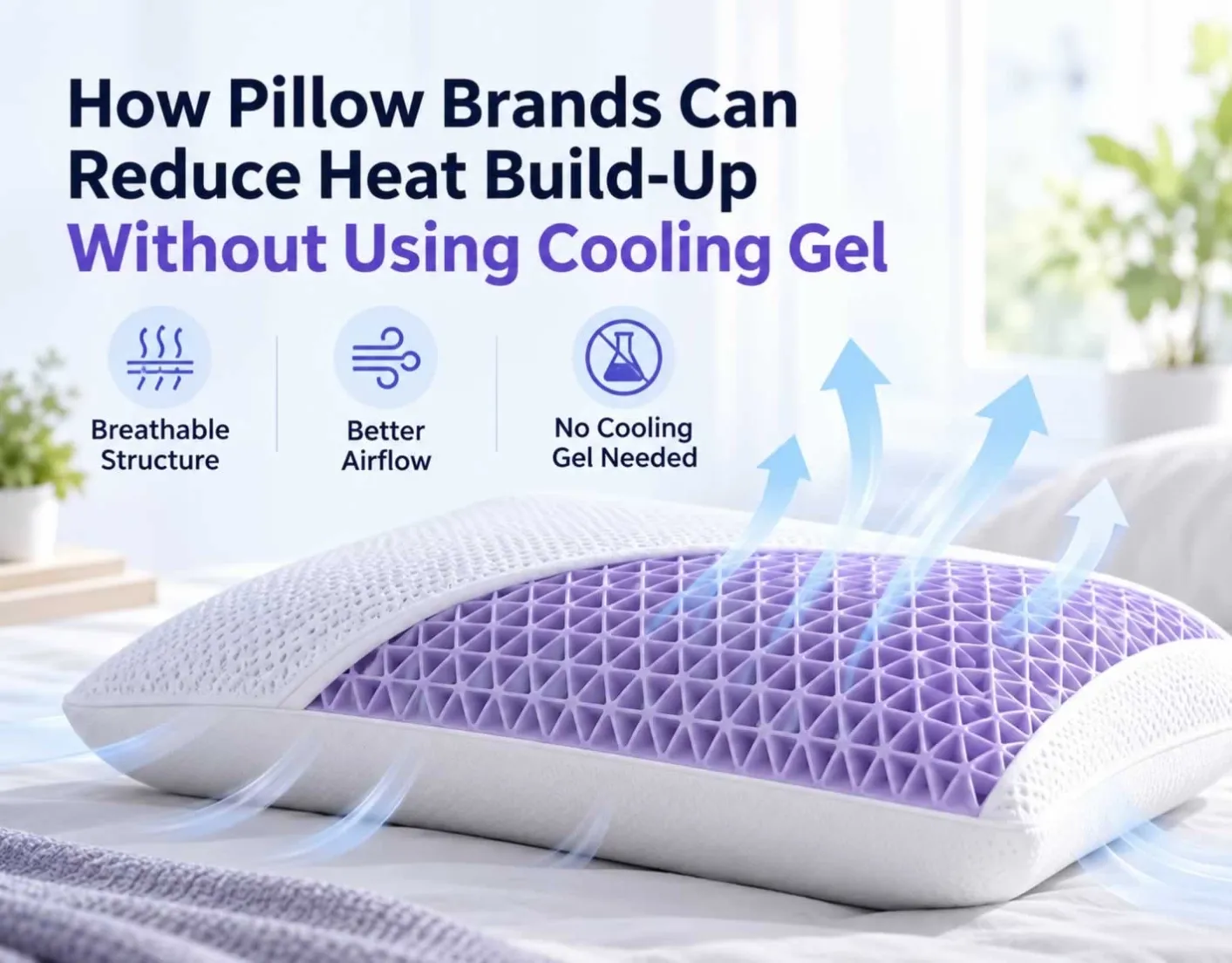
Cooling pillows have become an important category for sleep brands, bedding retailers and online sellers. However, many products in the market still rely on the same solution: adding cooling gel to a traditional memory foam pillow.
Gel-infused foam and gel pads can provide a cooler initial feel, but they are not the only way to reduce heat build-up.
For pillow brands developing a new collection, the more important question is:
How can the entire pillow structure improve airflow and release heat during sleep?
Instead of focusing only on cooling gel, manufacturers can improve breathability through material selection, ventilation design, pillow construction and open comfort layers.
One increasingly practical option is to combine traditional pillow materials with a TPE Grid breathable layer.
Why Do Traditional Pillows Build Up Heat?
Heat build-up is usually not caused by one single factor.
A pillow may feel warm because of:
- Dense foam construction
- Limited internal airflow
- Poor moisture dissipation
- Thick non-breathable covers
- Excessive body contact with the pillow surface
- Materials that retain heat over time
Traditional memory foam is popular because it provides contouring and pressure relief. However, solid foam structures can restrict air movement around the head and neck.
This is why simply adding a cooling fabric to the outside may not fully solve the problem.
The cover may feel cool for the first few minutes, but if heat remains trapped inside the pillow, the sleeping surface can gradually become warmer.
1. Improve Airflow Inside the Pillow
One of the most effective ways to reduce heat build-up is to create more open space inside the pillow.
Manufacturers can use:
- Perforated memory foam
- Open-cell foam
- Ventilation channels
- Latex structures
- Mesh materials
- TPE Grid layers
- Hybrid pillow designs
The principle is simple: more airflow pathways allow warm air to escape more easily.
For brands, this means cooling performance should be evaluated from the inside out, not only from the pillow cover.
2. Use an Open TPE Grid Comfort Layer
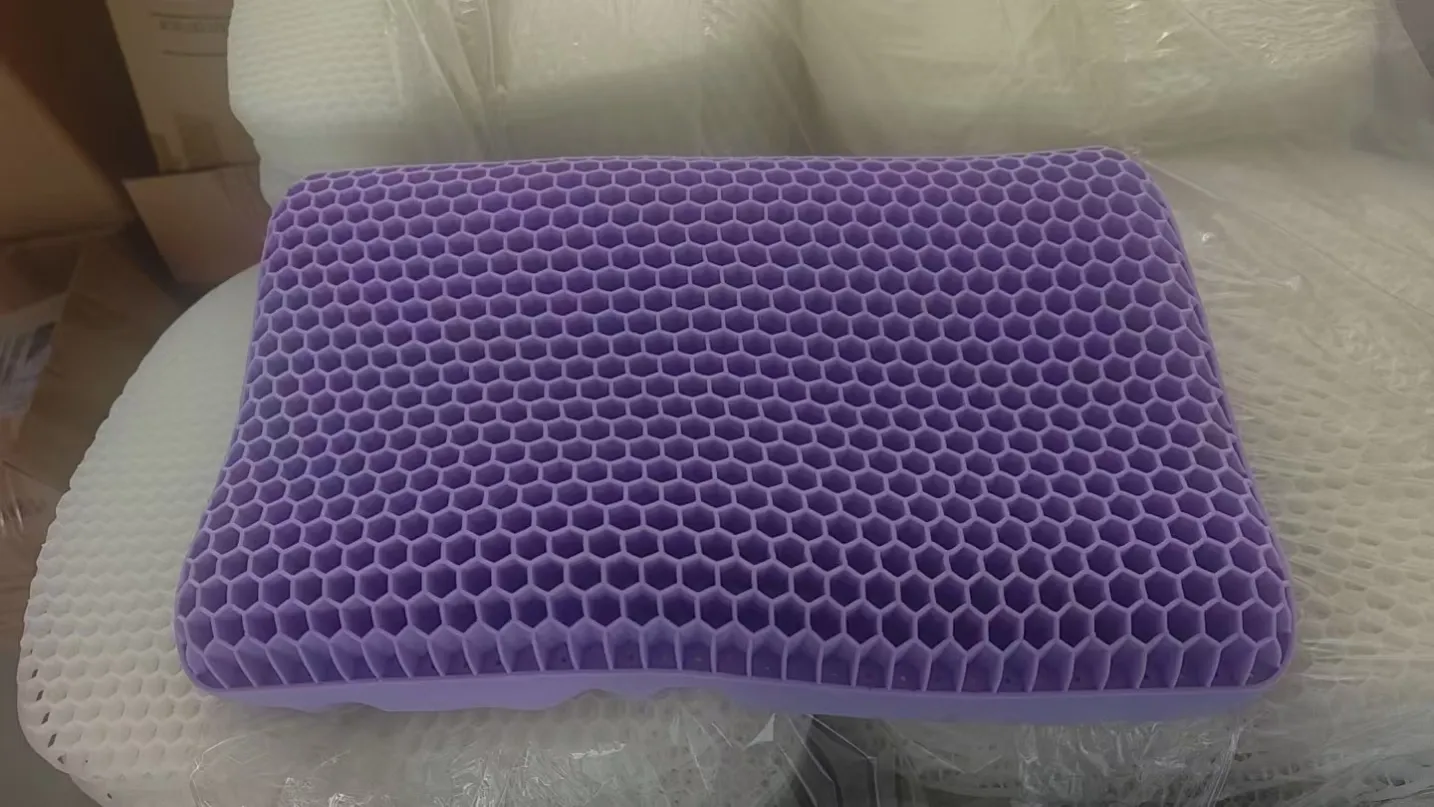
TPE Grid is different from solid foam because it uses a flexible three-dimensional grid structure.
The open spaces between the grid walls create continuous airflow channels throughout the material.
When the sleeper moves or changes position, the grid compresses and rebounds, encouraging air movement through the structure.
For pillow brands, this creates an alternative way to develop a breathable product without depending entirely on cooling gel.
TPE Grid can be used in several constructions:
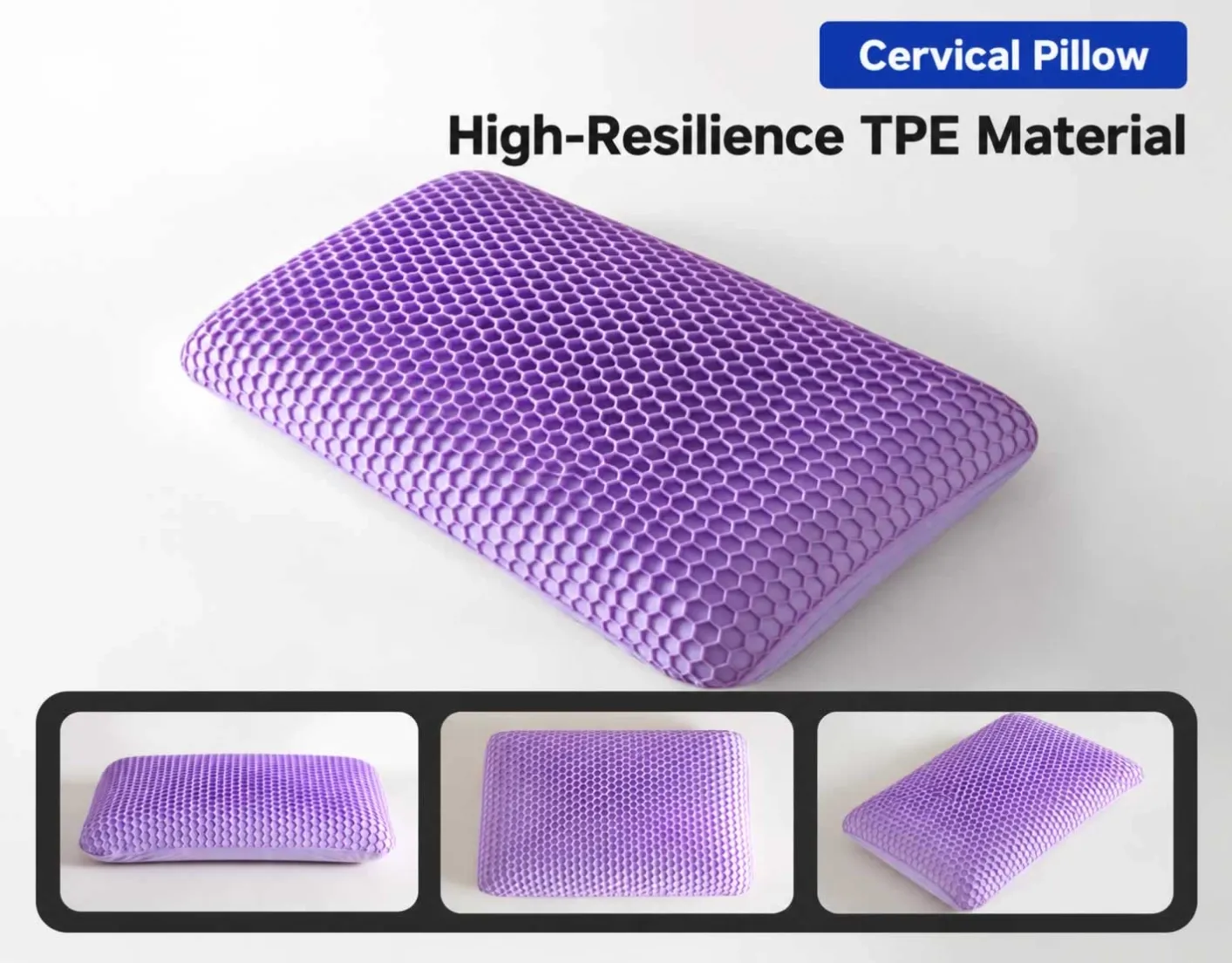
Full TPE Grid Pillow
A pillow made primarily from the flexible grid material, suitable for brands seeking a distinctive product structure.
TPE Grid + Memory Foam
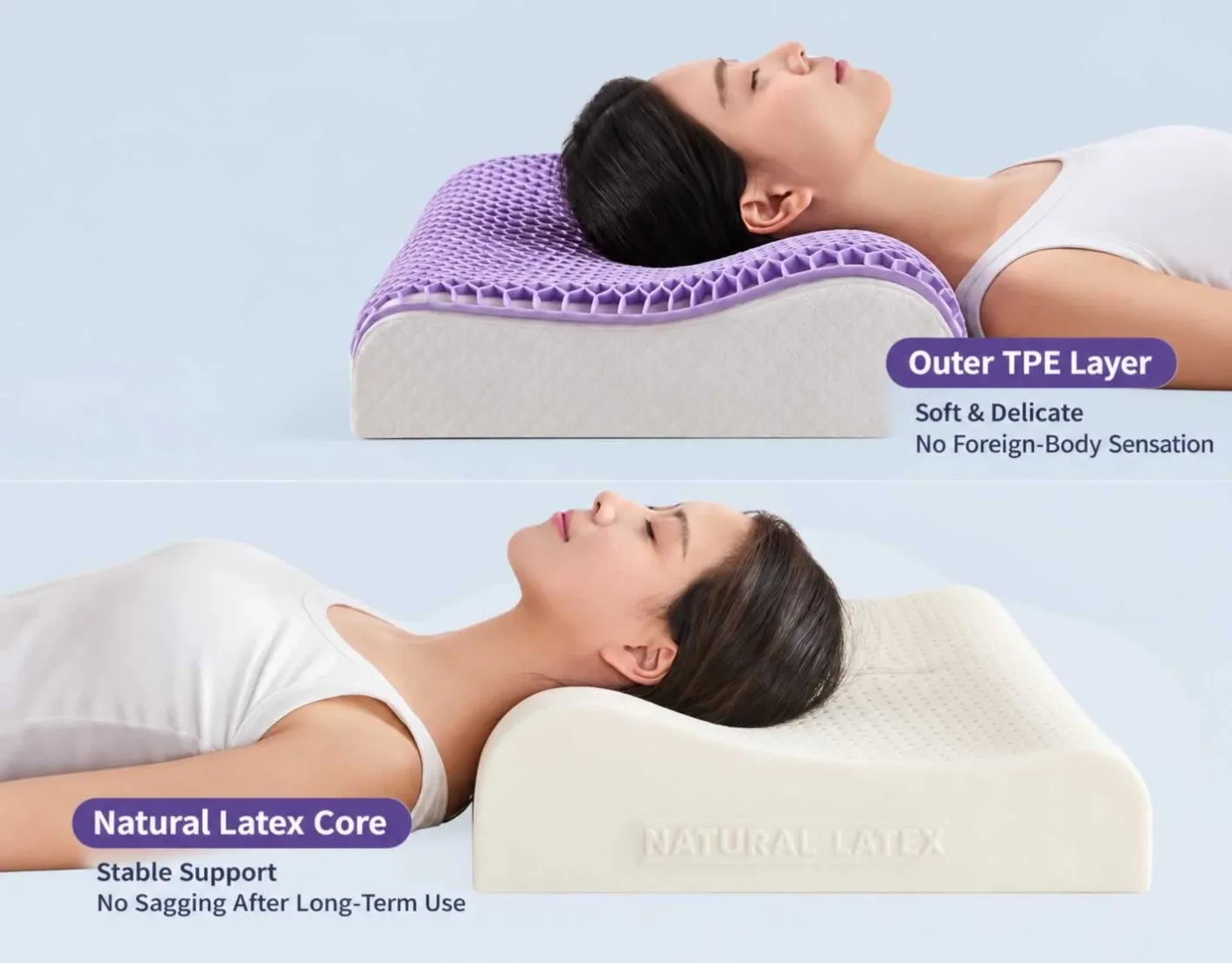
A hybrid design that combines the familiar contouring of memory foam with a more breathable upper comfort layer.
TPE Grid + Microfiber Filling
A softer construction for brands that want a more traditional pillow feel with improved ventilation.
These combinations allow manufacturers to develop different levels of firmness, support and product positioning.
3. Keep Memory Foam, but Upgrade the Structure
Pillow brands do not necessarily need to stop using memory foam.
Memory foam still offers several advantages, including pressure relief, contouring and strong consumer recognition.
The opportunity is to improve the areas where traditional memory foam can be limited.
For example, instead of selling another standard solid memory foam pillow, a brand can add a TPE Grid layer above the foam core.
This creates a hybrid cooling pillow with a stronger differentiation story.
The product can then be marketed around:
Breathability + Pressure Relief + Airflow + Support + Recovery
This is particularly useful for brands that already have a successful memory foam pillow line and want to introduce a new premium version without completely changing their product category.
4. Choose a More Breathable Pillow Cover
The pillow cover still plays an important role.
Instead of relying exclusively on a cooling coating, brands can use breathable knitted fabrics or performance textiles that allow better air exchange.
Depending on the target market, options may include:
- Nylon-spandex cooling fabric
- Breathable knitted fabric
- Moisture-wicking fabric
- Mesh side panels
- Stretch fabric
- Removable washable covers
A breathable cover works best when it is combined with an equally breathable internal structure.
If the cover allows airflow but the core remains completely dense, the overall benefit may still be limited.
5. Reduce Excessive Surface Contact
Another approach is to change how the pillow supports the sleeper.
A flexible grid structure can distribute pressure while creating small open areas between the body and the pillow surface.
This can help reduce the feeling of being surrounded by a dense foam material.
For ergonomic pillow development, grid thickness, firmness and pattern can also be adjusted according to the desired support level.
Brands can therefore create different products for:
- Side sleepers
- Back sleepers
- Hot sleepers
- Ergonomic pillow users
- Premium bedding customers
This gives private label brands more flexibility than simply changing the color or fabric of a standard pillow.
6. Test Long-Term Cooling Performance
Cooling performance should not be judged only by touching the pillow for several seconds.
Brands should test how the product performs after extended contact.
Important factors include:
- Airflow after compression
- Heat dissipation
- Moisture management
- Material recovery
- Long-term elasticity
- Pillow firmness
- Shape retention
A good cooling pillow should remain comfortable after hours of use, not simply create a cold first impression.
This is especially important for e-commerce brands because customer reviews often focus on overnight comfort rather than showroom feel.
7. Work With a Manufacturer That Supports Custom Development
When sourcing a cooling pillow manufacturer, buyers should look beyond the finished product price.
A strong OEM supplier should be able to adjust the pillow according to the brand's positioning.
Customization may include:
- Pillow dimensions
- Pillow height
- TPE Grid thickness
- Grid pattern
- Material firmness
- Memory foam density
- Microfiber filling
- Cooling covers
- Custom colors
- Logo labels
- Retail packaging
- Custom boxes
For established brands, the supplier should also be able to develop a new breathable layer around an existing pillow concept.
This can shorten product development time and reduce the risk of launching a completely unfamiliar product.
Cooling Without Gel Is Possible
Cooling gel is one solution, but it is not the only solution.
For pillow brands, improving airflow may provide a more structural approach to heat management.
By combining breathable fabrics with open internal materials, ventilation channels and TPE Grid technology, manufacturers can create cooling pillows that focus on continuous airflow rather than only surface cooling.
For brands already selling memory foam pillows, TPE Grid can also provide a practical upgrade path.
Instead of replacing the entire pillow, a breathable grid layer can be added to create a new hybrid cooling pillow with stronger differentiation.
Looking for an OEM Cooling Pillow Manufacturer?
We support private label and OEM development for:
TPE Grid Pillows | TPE + Memory Foam Pillows | TPE + Microfiber Pillows | Cooling Pillow Covers | TPE Grid Sheets | Mattress Comfort Layers
Custom sizes, firmness, structures, colors, covers, logos and packaging are available.
If you are developing a new cooling pillow or looking for an alternative to traditional gel-infused memory foam, we can develop samples based on your target market and product positioning.
Contact us for samples, specifications, MOQ and wholesale pricing.